Lucksamon Thamlikitkul, Kwanjeera Wanichthanarak, Siriphan Manocheewa, Suphitcha Limjiasahapong, Natthaporn Phonsatta, Sujichon Thangvichien, Atikorn Panya, Yongyut Sirivatanauksorn, Naravat Poungvarin, Sakda Khoomrung
Abstract
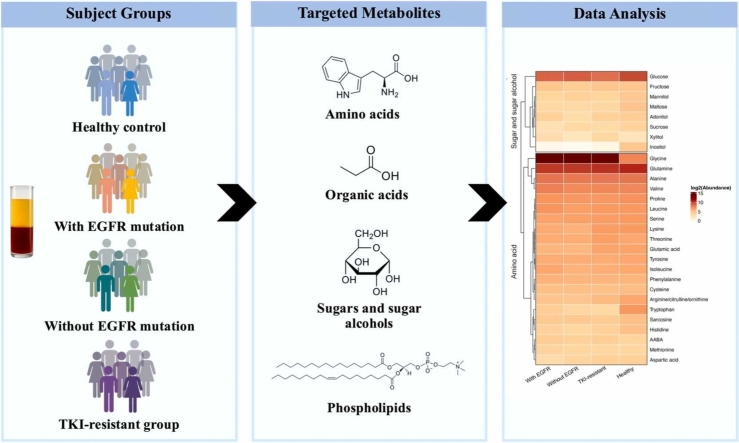
Lung cancer remains the leading cause of cancer-related mortality worldwide, underscoring the urgent need for non-invasive approaches to improve diagnosis, patient stratification, and therapeutic monitoring. Metabolic reprogramming driven by oncogenic alterations-particularly Epidermal Growth Factor Receptor (EGFR) mutations in non-small cell lung cancer (NSCLC)-creates distinctive plasma signatures with clinical relevance. In this study, plasma metabolomic profiling revealed that amino acid and sugar metabolism exhibited the strongest discriminatory patterns. NSCLC patients consistently showed elevated glycine and reduced tryptophan and inositol compared with healthy controls. Distinct amino acid and organic acid shifts further differentiated EGFR-mutated from wild-type NSCLC, while alterations in tryptophan, valine, and oxalic acid characterized patients with acquired resistance to EGFR tyrosine kinase inhibitors (TKIs). These findings underscore biologically relevant metabolic alterations associated with EGFR mutation and TKI resistance, supporting the potential of plasma metabolite profiles as minimally invasive indicators for molecular classification and treatment response in NSCLC.