• EN
  • TH
Department of Immunology
  • Home
  • About Us
    • About Us
      • History
      • Vision Mission
    • People
      • Faculty
      • Affiliated Faculty
      • Administrative
      • Postdoctorate Fellow
  • Education
    • Program Overview
      • Master Degree
      • Doctoral Degree
    • Admissions
      • Prospective Students
        • M.Sc.
        • Ph.D.
      • Scholarships
  • Research
    • Research Divisions
      • Viral Immunology Research Laboratory
      • Cancer Immunodiagnosis
      • Allergy and Clinical Immunology
      • Limbal stem cells for corneal epithelial restoration
      • Immunogenetics of Diabetes
      • Immunology on infectious diseases
      • Cancer Microenvironment and Immunotherapy
      • Phage technology for health and agriculture
      • Single-cell Omics and Regenerative Medicine
      • Cellular immunotherapy and Autophagy modulation for cancer treatment
    • Collaboration
      • Immunology Research Collaboration Unit (IMRC)
      • Educational Collaboration
      • Departmental Collabaration
      • International Exchange
  • Service
    • Service Laboratory
    • Administration
  • Careers
  • News
    • Activities
    • Conferences
    • Workshop
    • Research
    • Education
  • Menu Menu
Left-thin Left-thin Faculty Member

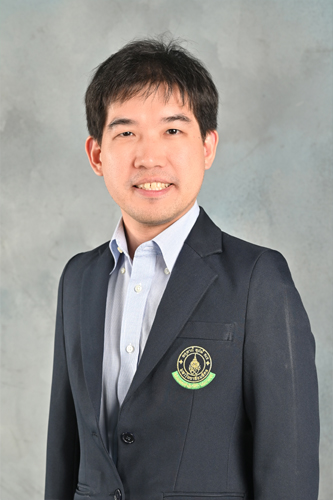
Dr.Nathachit Limjunyawong

  • Dot Dot
    Academic Position: Instructor
  • Dot Dot
    Management Position:
  • Dot Dot
    Professional degrees: PhD. (Environmental Health Science), Johns Hopkins Bloomberg School of Public Health
  • Dot Dot
    Other Qualifications: Postdoc, Johns Hopkins School of Medicine
  • Graduation-cap Graduation-cap
    Recruiting Status: Not recruiting
  • Location Location
    Office location: Room 1110, Department of Immunology
  • Phone Phone
    Office Phone number: (+66) 02-419-5501
  • Network Network
    Website: https://scholar.google.com/citations?user=5AcTMqkAAAAJ&hl=en&oi=ao
  • Mail Mail
    Work Email Address: nathachit.lim@mahidol.ac.th
  • Mail Mail
    Email Address:

Research Profile

His current research focuses on understanding how environmental exposures influence immune-related diseases and lung cancer development.

His research encompasses two major areas. First, he investigates the immunological mechanisms underlying allergic and infectious diseases, with a particular focus on epithelial barrier function and innate immune responses involving granulocytes such as mast cells, eosinophils, and neutrophils.

Using multidisciplinary approaches, he examines how immune cells respond to diverse environmental stimuli and applies this knowledge to address regional health challenges, including parasitic infections such as Angiostrongylus-induced eosinophilic meningitis, allergic diseases caused by dust mite and cockroach, mechanisms of itch, and the health effects of PM2.5 air pollution. Second, his research explores the environmental and cellular mechanisms driving lung cancer carcinogenesis.

To support this work, his team is establishing a biobank of donor-matched normal lung and lung cancer o—a population disproportionately affected in Asia—and facilitating the development of population-specific prevention and therapeutic strategies.

Publications

  1. Charoennitiwat V, Sukwattananipaat P, Ratnarathorn N, Pewla-Oo S, Viriyautsahakul S, Thongsom C, et al. Comparative neuropathogenesis of Angiostrongylus cantonensis and Angiostrongylus malaysiensis infection in an experimental BALB/c mouse model. Acta Trop. 2026;279:108113.
  2. Kothari R, Abdulrahim MW, Oh HJ, Capuzzi DH, Kilgore CB, Nair SK, et al. A mast cell receptor mediates post-stroke brain inflammation via a dural-brain axis. Cell. 2025;188(20):5499–515 e20.
  3. Chien DC, Limjunyawong N, Cao C, Meixiong J, Peng Q, Ho CY, et al. MRGPRX4 mediates phospho-drug-associated pruritus in a humanized mouse model. Sci Transl Med. 2024;16(746):eadk8198.
  4. Kline SN, Orlando NA, Lee AJ, Wu MJ, Zhang J, Youn C, et al. Staphylococcus aureus proteases trigger eosinophil-mediated skin inflammation. Proc Natl Acad Sci U S A. 2024;121(6):e2309243121.
  5. Han L, Limjunyawong N, Ru F, Li Z, Hall OJ, Steele H, et al. Mrgprs on vagal sensory neurons contribute to bronchoconstriction and airway hyper-responsiveness. Nat Neurosci. 2018;21(3):324–8.

Curriculum Vitae

Download CV

Views: 15

department of immunology

Department of Immunology

  • Floors 11–12
  • Adulyadejvikrom Building, Faculty of Medicine Siriraj Hospital, Mahidol University, 2 Prannok Road, Bangkok Noi District, Bangkok


  • 02-419-7000 # 96635, 96636, 02-418-0569
  • 02-418-1636
  • siim@mahidol.edu

Immunology Graduate Office

  • 02-419-6655
  • SirirajImmuno
  • @departmentofimmunol70
  • siimphdms@mahidol.edu

Interest Link

    • Faculty of Medicine Siriraj Hospital
    • Mahidol University
    • MU Graduate


© Copyright - Department of Immunology
  • Link to X
  • Link to Dribbble
  • Link to Facebook
Scroll to top Scroll to top Scroll to top