Sirindhorn School of Prosthetics and Orthotics (SSPO)
Overview Menu
- Scholarship and Financial Support
- Admission Requirements and Instructions
Program Overview [Objectives and Learning Outcomes]
- Objectives of the Program
To develop graduates with the following competencies:
- Possess the knowledge in prosthetic and orthotic sciences, biomechanics, medical sciences, other related sciences to the provision of prosthetic and orthotic treatment.
- Demonstrate the skills involved in prosthetic and orthotic treatment in accordance with international professional standards.
- Express enthusiasm for personal and professional development by utilizing technology and evidence to promote sustainable lifelong learning skills.
- Demonstrate an ethical, moral, and proper attitude toward the prosthetic and orthotic profession
- Collaborate and communicate with multidisciplinary teams, including patients, and adapt to the diversity of global society.
- Program Learning Outcomes (PLOs)
Upon completing the program, graduates will be able to:
PLO1: Integrate knowledge of medical sciences, Prosthetics and Orthotics, and related fields to perform tasks in the field of Prosthetics and Orthotics correctly.
PLO2: Produce prosthetic devices according to professional standards, meeting the needs of users.
PLO3: Critically analyze academic information to develop systematic problem-solving strategies and contribute to the creation of projects in prosthetics that promote lifelong learning.
PLO4: Communicate effectively with target audiences, aligning with the objectives of the communication.
PLO5: Exhibit behaviors that reflect the identity of Siriraj graduates.
PLO6: Work as part of a team and demonstrate leadership to creatively solve problems - Career Opportunities of the Graduates
- Prosthetist and Orthotist
- Academic/Researcher
- Healthcare Consultant
- Sales and Marketing Specialist
- Entrepreneur
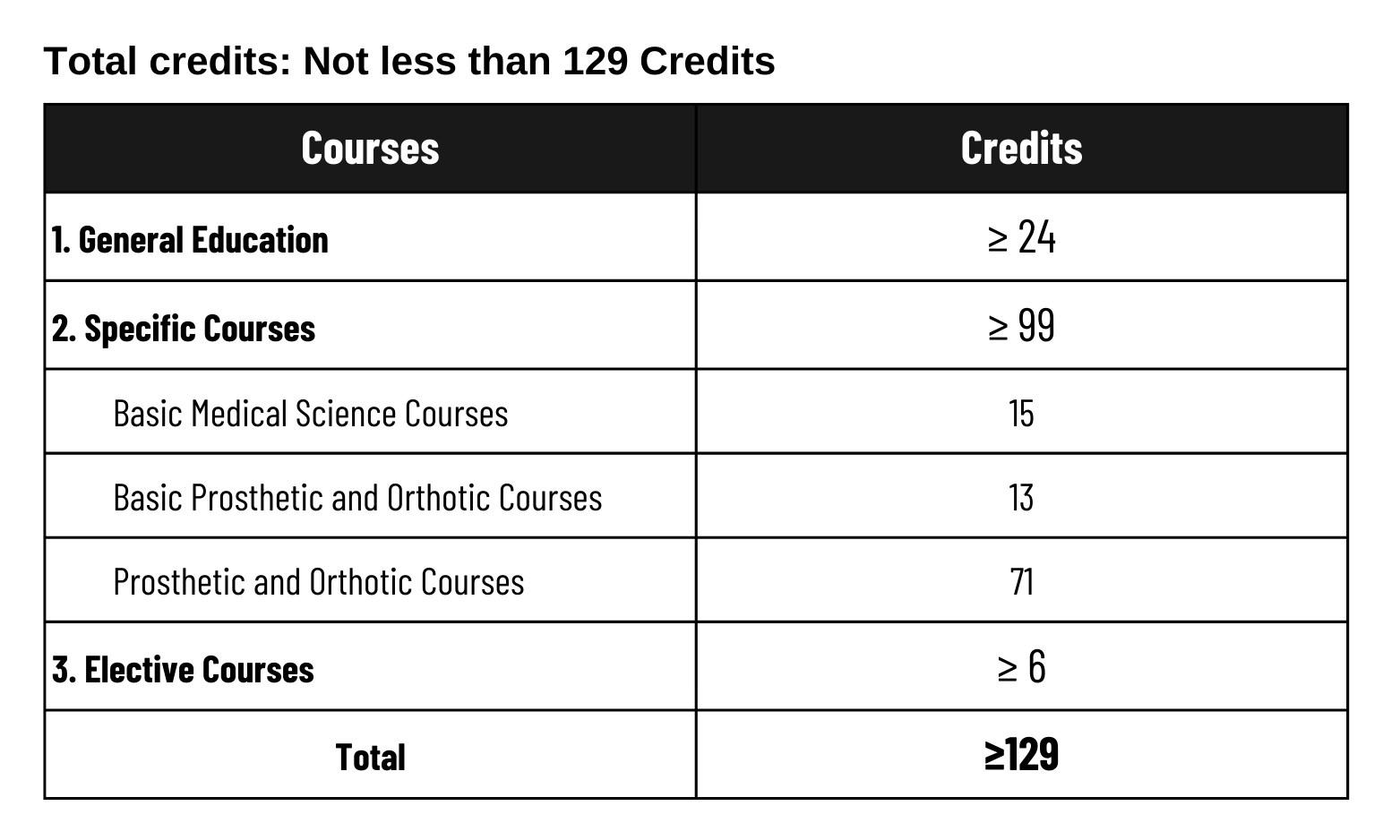
Curriculum Structure
Online Document : N/A
Introducing our courses
MUGE 100 General Education for Human Development
Well-rounded graduates, key issues affecting society and the environment with respect to one’ particular context; holistically integrated knowledge to identify the key factors; speaking and writing to target audiences with respect to objectives; being accountable, respecting different opinions, a leader or a member of a team and work as a team to come up with a systematic basic research-based solution or guidelines to manage the key issues; mindful and intellectual assessment of both positive and negative impacts of the key issues in order to happily live with society and nature
Language Courses as Designated by the University
Thai language course
English language course
Students may choose any language course offered in the undergraduate program at Mahidol University, subject to approval by the Bachelor of Science in Prosthetics and Orthotics Program Committee and in accordance with Mahidol University’s regulations.
MU Literacy as Designated by the University
Students may select general education courses from the MU Literacy group offered at the university, provided they adhere to the Mahidol University announcement on the structure of general education courses for undergraduate programs (Thai curriculum) for the year 2023, and with the approval of the Bachelor of Science in Prosthetics and Orthotics Program Committee.
Courses in the Literacy group: Five groups, with at least one credit per group.
Students may select general education courses from the following Literacy groups, in addition to MU Literacy courses:
1. Health Literacy
2. Science and Environment Literacy
3. Intercultural & Global Awareness Literacy
4. Civic Literacy
5. Finance and Management Literacy
These courses are offered at the university and must comply with the Mahidol University announcement on the structure of general education courses for undergraduate programs (Thai curriculum) for the year 2023, with approval from the Bachelor of Science in Prosthetics and Orthotics Program Committee.
.
Basic Medical Science Courses
SIAN 110 Anatomy
Gross anatomy of human body regarding structure, function and relationships between various structures of head, face and neck, upper extremity and brachial plexus, and the thoracic and abdominal wall including surface anatomy and practice of cadaver dissection
SIPS 110 Physiology
Normal functions and mechanism of body systems such as musculoskeletal, circulatory, respiratory, endocrine, urinary, digestive, metabolism and body temperature regulatory systems
SIPO 110 Basic Biomechanics
Basic mathematics; linear and angular kinematics, linear and angular kinetics and mechanical load on the human body
SIPO 213 Applied Biomechanics
Application of kinetics and kinematic on human movement, posture and balance, biomechanics of bone, skeletal muscle, biomechanics of lower limb, upper limb and spine, biomechanical application of lower limb, upper limb and spinal in prosthetic and orthotic devices, ergonomics
SIPA 211 Pathology
Causes, mechanisms and basic pathologic changes of cell and tissue of human body suffering from diseases; pathology of organ systems that are important and/ or commonly found; principle of laboratory investigation; clinical microscopic, clinical chemistry, serology, hematology, molecular clinical pathology
SIPC 211 Psychology Practice for Persons with Physical Disabilities
Basic psychology; clinical psychology; psychological reaction to loss; persons with physical disabilities approach and communication
SIRM 211 Rehabilitation Medicine
Gross rehabilitation medicine and teamwork; goals and principles of rehabilitation; rehabilitation; assessment; quality of life; activities of daily living; introduction to physical therapy, occupational therapy; manual muscle testing, range of motion; rehabilitation of common disease/disorders
Basic Prosthetic and Orthotic Courses
SIPO 104 Ethics for Health Professionals
Principle and philosophical concepts in ethics, morals of prosthetic and orthotic profession; basic knowledge of laws relevant to prosthetic and orthotic profession; patient’s right, patient autonomy; professional-patient relationship; principle of giving information and counseling for the patient; holistic demeanour to the patient; moral behaviour in counseling and communication; analysis of ethical dilemmas
SIPO 124 Introduction to Prosthetics and Orthotics
Principle of prosthetics and orthotics education; terminologies and definition in prosthetics and orthotics; role of prosthetist and orthotist; development in prosthetics and orthotics and education in Thailand; national and international prosthetic and orthotic services
SIPO 226 Prosthetic and Orthotic Technical and Safety Skills
Basic knowledge and practical skills related to prosthetics and orthotics; awareness of health and safety; basic skills through the safe use of hand tools, portable power tools, machines, and personal protective equipment (PPE); properties of common materials used in prosthetics and orthotics, material sciences; practice activities involve materials and prosthetic and orthotic technical skills
SIPO 227 Clinical Gait Analysis
Gait terminology, normal gait, pathologic gaits; gait deviations; gait analysis principles in clinical setting
SIPO 327 Research in Prosthetics and Orthotics
Introduction to research methodology; research problems; literature review; research design; statistics in research; research example in prosthetics and orthotics; research proposal and final report structure; research presentation; ethics in research; writing a project proposal; doing a project; presenting a project; writing a final project report
Prosthetic and Orthotic Courses
SIPO 231 Pedorthic Science
A review of anatomy, biomechanics, pathology and deformity of foot; variation of material used in pedorthics; patient assessment for prescription principle; pedorthic management including using prefabricated devices, designing, manufacturing, fitting and offloading of custom-made orthotic appliances construction principle of medical grade footwear; footwear modification; clinical consideration; existing pedorthic appliances and theirs impact on human posture and gait
SIPO 232 Pedorthic Practice
Clinical practice and technical aspects on pedorthic appliances; patient assessment; biomechanical assessments and gait analysis; treatment planning; casting and foaming technique; positive cast modification methods; manufacturing of custom-made foot orthotic; modification of pre-fabricated footwear; fitting and adjustment; existing outcome and impact of pedorthic modalities
SIPO 233 Ankle Foot Orthotic Science
Biomechanics of lower leg; pathology of lower leg; physical assessment and gait analysis; biomechanics of ankle foot orthosis; variation of materials; prescription principle of ankle foot orthosis; principle of lower limb orthosis; variation of an ankle foot orthosis prescription principle of ankle foot orthosis; outcome measurement and method
SIPO 234 Ankle Foot Orthotic Practice
Clinical practice and technical aspect of ankle foot orthosis;assessment and gait analysis; casting technique for ankle foot orthosis; fabrication and joint setting techniques; fitting technique for ankle foot orthosis; the ankle foot orthosis trial for walking; outcome analysis and clinical problem solving
SIPO 245 Ankle Disarticulation and Transtibial Prosthetic Science
Principles of rehabilitation and prosthetic management of ankle disarticulation and transtibial amputation; functional deficits and psychosocial impact; pre-and post-operative care; biomechanical principles; structures and components of prosthesis and clinical reasoning; manufacturing process; physical assessment; casting; modification; bench alignment setting, fitting and gait analysis, cosmetic finishing; gait training; patients education
SIPO 246 Ankle Disarticulation and Transtibial Prosthetic Practice
Clinical and technical aspects of ankle disarticulation and transtibial amputation prosthetic management; systematic approach to patient assessment, application of biomechanics to prosthetic component selection; prosthetic manufacturing process; casting; modification; bench alignment setting, fitting and gait analysis, cosmetic finishing; gait training; patients education; problem solving and clinical reasoning
SIPO 334 Knee Ankle Foot Orthotics
A lower limb assessment and deformities of hip, knee, ankle; clinical evaluation for orthotic prescription, orthotic adjustment, treatment plan; principles of knee ankle foot orthotic treatment; material and component selection; biomechanical approach; knee ankle foot orthotic fabrication, fitting, outcome measurement, clinical problem solving; complication of knee ankle foot orthotic fitting, A clinical practice of lower limb assessment; deformities of knee, ankle; evaluation for orthotic prescription, orthotic adjustment, treatment plan
SIPO 335 Cranial and Spinal Orthotic Science
A review of anatomy, biomechanics, pathologies related to cranial and spine; multidisciplinary team approach to cranial and spinal problems; exercise for spinal problems; prescription consideration; cranial remolding orthotic principle; variation of cranial remolding orthosis; spinal orthotic principle, variation of spinal orthoses; orthotic management for patient with scoliosis; x-ray examination; biomechanical principle of orthotic design; patient communication and assessment; measurement and casting, plaster modification, fitting and modifying the cranial orthoses and spinal orthoses, outcome analysis and clinical problem solving
SIPO 336 Cranial and Spinal Orthotic Practice
Clinical demonstration and practice of cranial remodeling and spinal orthotic management for patient with cranial and spinal disorders; patient assessment; prescription and orthotic design for scoliosis patient including material selection, casting, plaster modification, fabrication, fitting, problem solving and outcome evaluation; cranial remodeling orthotic and spinal orthotic adjustment; patient education; caregiver and family education in the use and care of orthotic devices; patient communication
SIPO 337 Upper Limb Orthotics
A review of anatomy, biomechanics, pathologies related to upper limb; upper limb orthotic prescription principles and interventions; variation of upper limb orthoses; materials used in upper limb orthoses; patient assessment, measurement and casting, plaster modification, fabrication, fitting of upper limb orthoses; outcome measurement and clinical problem solving
SIPO 347 Knee Disarticulation and Transfemoral Prosthetic Science
Physical and functional deficits related to the knee disarticulation and transfemoral amputate; pre- and post-operative prosthetic care; basic principle and biomechanical concept of the knee disarticulation and transfemoral prosthesis; composition of prosthesis, variation of design, materials and components; prosthetic prescription considerations; patient assessment; principles of manufacturing, alignment setting, fitting and adjustment, finishing of knee disarticulation and transfemoral prostheses; prosthetic gait analysis; knee disarticulation and transfemoral prosthetic gait training; patient education; outcome measurement for patients with knee disarticulation and transfemoral prosthesis
SIPO 348 Knee Disarticulation and Transfemoral Prosthetic Practice
Clinical and technical aspects on knee disarticulation and transfemoral amputees; an assessment and prescription based on the biomechanics principle; prosthetic socket design, components and materials selection; casting, rectification, fabrication and alignment, fitting, finishing; prosthetic problem analysis, solution
SIPO 349 Upper Limb Prosthetics
Physical, mental and functional deficits related to the upper limb amputee; congenital upper limb deficiency; pre- and post-operative prosthetic care; basic principle and biomechanical concept of the upper limb prosthesis; clinical and technical aspects on upper limb amputees; composition of prosthesis, variation of design, materials and components; prosthetic prescription consideration; patient assessment; principles of manufacturing, alignment setting, fitting and adjustment, finishing of the upper limb prosthesis; patient education; outcome measurement for patients with upper limb prosthesis
SIPO 351 Fundamental of Clinical Reasoning
Clinical reasoning principles and impact on clinical practice; clinical reasoning process; critical thinking and clinical decision-making strategies; International Classification of Functioning, Disability and Health; evidence-based practice; patient and interprofessional communication; practice of case-based clinical reasoning and clinical problem solving
SIPO 352 Clinical Practice 1
A preparation to the clinical experience; an observation of prosthetic and orthotic services, patient approach under supervision and guidance; professional competence, health and safety, attitudes and ethical behavior, communication, interpersonal skills, and teamwork; an application of knowledge and prosthetic and orthotic technical skills to the prepared case under closed supervision; reviewing medical reports; performing and interpreting clinical assessments; treatment planning; implementation the treatment plan, manufacturing and fitting of the prosthetic and orthotic devices; reviewing and evaluating the result of the prosthetic and orthotic devices
SIPO 427 Wheelchair and Seating for Persons with Physical Disabilities
An introduction to the mobility, sitting posture, transfering, pressure sores, and the wheelchair service steps, cushion, and custom modified seating for the users; referral, assessment, measurement, casting, prescription, ordering, preparation or fabrication, fitting, user training, maintenance, repairs, and follow up
SIPO 448 Partial Foot and Hip Disarticulation Prosthetics
Physical and functional deficits related to the partial foot and hip disarticulation amputate; basic principle and biomechanical concept of the partial foot and hip disarticulation prosthesis; composition of prosthesis, variation of design, materials and components; prosthetic prescription considerations; patient assessment; principles of manufacturing, alignment setting, fitting and adjustment of partial foot and hip disarticulation prostheses; prosthetic gait analysis; partial foot and hip disarticulation prosthetic gait training; patient education; outcome measurement for patients with partial foot and hip disarticulation prosthesis; cosmetic finishing for partial foot prosthesis
SIPO 451 Clinical Practice 2
A continuous preparation to the clinical experience; an observation of prosthetic and orthotic services, patient approach under lower level of supervision and guidance; professional competence, health and safety, attitudes and ethical behavior, communication, interpersonal skills, and teamwork; an application of knowledge and prosthetic and orthotic technical skills to the complexed cases under supervised environment; reviewing medical reports; performing and interpreting clinical assessments; treatment planning; emphasizing evidence-based practice; implementation the plan, manufacturing and fitting of the prosthetic and orthotic devices; reviewing and evaluating the final devices; case discussion as a member of health care team
SIPO 452 Clinical Experience 1
An application of knowledge and skills into real practice; a clinical practice of the prosthetic and orthotic services to the real patient independently under a close supervision of clinical instructor at the internal collaboration training placement; A process of patient check-in until device delivery and follow up in the clinical service; the reimbursement of prosthetic and orthotic device; patient’s right and payment; workplace professionalism and independent work; communication and interpersonal skills, planning and time management; knowledge exchange from case study discussion; a written clinical report and a case presentation; a reflection of self-experience
SIPO 453 Clinical Experience 2
An application of knowledge and skills into real practice; a clinical practice of the prosthetic and orthotic services to the complexed case independently under a consult of clinical instructor at the internal or external collaboration training placement; A process of patient check-in until device delivery and follow up in the clinical service; the reimbursement of prosthetic and orthotic device; patient’s right and payment; professionalism and ethics consideration as a healthcare profession; communication and interpersonal skills, planning and time management; knowledge exchange from case study discussion; a written clinical report and a case presentation; a reflection of self-experience
Students may select to enroll in any undergraduate course offered at Mahidol University or other institutions, subject to approval by the Program Committee and in compliance with Mahidol University’s regulations.
Tuition and Fees
Tuition and Fees
Thai Baht21,000/semester
Scholarship and Financial Support
Mahidol University scholarships are designed to support Thai program students who excel academically and exhibit good behavior. Each type of scholarship has different application periods and specific details.
1. Mahidol University Scholarship (ทุนสนับสนุนการศึกษาของมหาวิทยาลัย)
Criteria: Depending on the scholarship
Application period: Depending on the scholarship (Jan-Dec)
2. Faculty of Medicine Siriraj Hospital Scholarship (ทุนสนับสนุนการศึกษาของคณะฯ)
Criteria: 1st – 4th year student
Application period: August
3. Private Outside Scholarship (ทุนสนับสนุนการศึกษาจากแหล่งทุนภายนอก)
ทุนธนชาติประกันภัย
ทุนมูลนิธิ SCG
ทุนพระราชทานในสมเด็จพระบรมโอรสาธิราชฯ
ทุนกรุงไทยการไฟฟ้า
อื่นๆ
**จำนวนทุนอาจเพิ่ม-ลด ตามปีการศึกษานั้นๆ
Criteria: Depending on the scholarship
Application period: Most applications open in August-September
4. Mahidol University Support Scholarships (ทุนช่วยเหลือและสนับสนุนของมหาวิทยาลัย)
ทุนช่วยเหลือพิศษ (มูลนิธิมหาวิทยาลัยมหิดล)
กองทุนกู้ยืมของคณะฯ
Criteria: Depending on the scholarship
Application period: Applications are open year-round.
5. Mahidol University Welfare Scholarships (ทุนสวัสดิการของมหาวิทยาลัย)
Criteria: Depending on the scholarship
Application period: Applications are open year-round.
6. Mahidol University Welfare Scholarships (ทุนสวัสดิการของมหาวิทยาลัย)
กองทุนเงินให้กูยืมเพื่อการศึกษา (กยศ.)
Criteria: รายได้ครอบครัวไม่เกิน 200,000 บาทต่อปี (CGPA > 2.00)
Application period: June – July
1. Mahidol University Exchange Scholarship (ทุนสนับสนุนการแลกเปลี่ยน/ดูงานของมหาวิทยาลัย)
MU Student Mobility program
MU Internship Scholarship
Others
Criteria: Depending on the scholarship
Application period: Approximately in October – until the budget reaches the limit
**Apply at least 8 weeks before departure, and travel before September 30.
- SSPO Health Science Student Scholarship (ทุนวิทยาศาสตร์สุขภาพ)
Criteria: 3rd year student (CGPA > 2.75)
Application period: January
- Other Private Outside Scholarship
Criteria: Depending on the scholarship
Application period: Depending on the scholarship
Admission Requirements
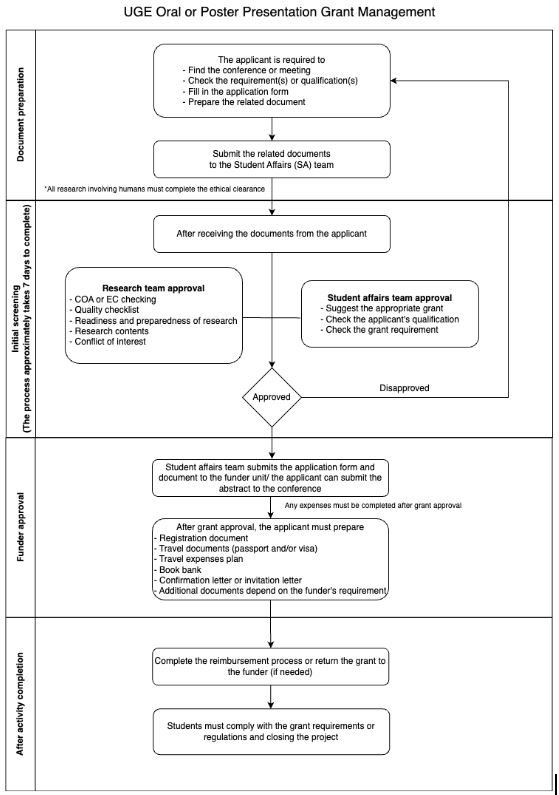
Students interested in applying for enrollment in the Bachelor program in Prosthetics and Orthotics must apply to Thai University Central Admission System (TACS) at the https://tcas.mahidol.ac.th/ for Portfolio and Quota rounds and MyTCAS system https://www.mytcas.com for Admission rounds and please follow the application instructions on the website to apply online.
Contact us
Undergraduate Educator : sisspoedu@mahidol.edu | +662 419 3441