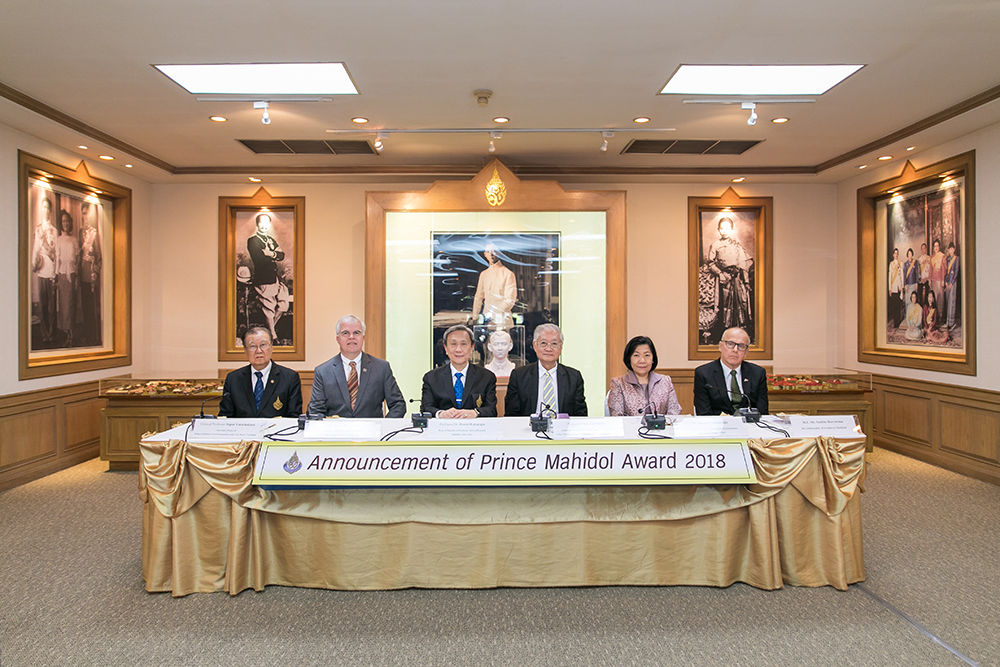
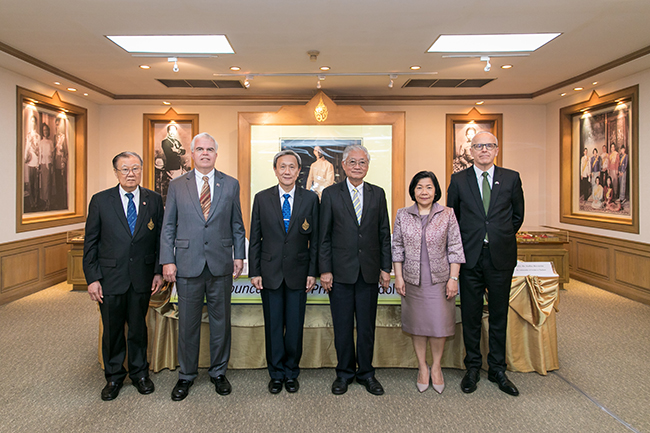
On November 21st, 2018, Professor Dr. Prasit Watanapa, Dean of the Faculty of Medicine, Siriraj Hospital, Mahidol University, in the capacity of Vice President of the Prince Mahidol Award Foundation; Ms. Busadee Santipitaks, Director-General of the Department of Information, Ministry of Foreign Affairs of Thailand, in the capacity of the Chairman of the Sub-Committee on Public Relations of the Prince Mahidol Award Foundation; and Professor Vicharn Panich, Chairman of the International Award Committee of the Prince Mahidol Award Foundation, held a joint press conference to announce the 27th Prince Mahidol Award for 2018 at the Prince Mahidol Memorial Room, 2nd Floor, Syamindra Building, Siriraj Hospital.
This year, the Prince Mahidol Award in the field of Medicine is awarded to Professor Brian J. Druker, M.D. and Professor Dr. Mary-Claire King, Ph.D.
The Prince Mahidol Award in the field of Public Health is awarded to Professor John D. Clemens, M.D. and Professor Jan R. Holmgren, M.D., Ph.D.
There were 49 nominations from 25 countries in total. The Scientific Advisory Committee carefully screened all candidates from the year 2018, 2017, 2016 and subsequently submitted a short list of the candidates to the International Award Committee who scrutinised and made a recommendation to the Board of Trustees. H.R.H. Princess Maha Chakri Sirindhorn presided over the meeting of the Board of Trustees held on 2 November 2018 during which the final decision on the Prince Mahidol Award 2018 was made.
In the past 26 years, 79 individuals, groups of individuals, and institutions have received the Prince Mahidol Award. Among them, 4 Thai nationals have received the Prince Mahidol Award: (1) Professor Dr. Prasong Tuchinda and (2) Dr. Suchitra Nimmannitya were conferred the Prince Mahidol Award in the field of Medicine in 1996, and (3) Dr. Wiwat Rojanapithayakorn and (4) Mr. Mechai Viravaidya were conferred the Prince Mahidol Award in the field of Public Health in 2009.
Among them, 5 subsequently received the Nobel Prize:
– (1) Professor Barry J. Marshall from Australia was conferred the Prince Mahidol Award in the field of Public Health in 2001 for the discovery of the new bacterium identified as Helicobacter pylori that caused severe gastritis, and its sensitivity to particular antibacterial drugs. He received the Nobel Prize in the field of Medicine in 2005 for the same discovery.
– (2) Professor Harald Zur Hausen from Germany was conferred the Prince Mahidol Award in the field of Medicine in 2005 for the discovery of the virus, namely human papilloma virus HPV16 and HPV18, from the cancer tissue and elucidated the mechanism that the viruses turn the normal cell into cancer cells. He received the Nobel Prize in the field of Medicine in 2008 for the same discovery.
– (3) Professor Dr. Satoshi Omura was conferred the Prince Mahidol Award in the field of Medicine in 1997. He is known for the discovery and development of various pharmaceuticals originally occurring in microorganisms. His research group isolated a strain of Streptomyces avermitilis that produce the anti-parasitical compound avermectin which contributed to the development of the drug ivermectin that is today used against river blindness, lymphatic filariasis, and other parasitic infections. He received the Nobel Prize in the field of Medicine in 2015 for the same discovery.
– (4) Professor Tu You You, a member of The China Cooperative Research Group on Qinghaosu and its Derivatives as Antimalarials, was conferred the Prince Mahidol Award in the field of Medicine in 2003 as an organisational category for the discovery of Qinghaosu as a new drug for treatment of the P.falciparum malaria. He received the Nobel Prize in the field of Medicine in 2015 for the same discovery
– (5) Sir Gregory Paul Winter was conferred the Prince Mahidol Award in the field of Medicine in 2016. He was a pioneer in the field of antibody engineering and modification technology. He invented techniques to humanise antibodies for therapeutic uses, which later led to the creation of cutting-edge therapeutic drugs. He received the Nobel Prize in the field of Chemistry in 2018 for the same discovery.
The Prince Mahidol Award Foundation under the Royal Patronage was established in commemoration of the centenary of the birth of His Royal Highness Prince Mahidol of Songkla, on 1 January 1992. The Foundation is under the Royal Patronage, with Her Royal Highness Princess Maha Chakri Sirindhorn as President. The Foundation annually confers two Prince Mahidol Awards upon individual(s) or institution(s), which have demonstrated outstanding and exemplary contributions to the advancement of the world’s medical and public health services. Each Award consists of a medal, a certificate and a sum of US $100,000.
Her Royal Highness Princess Maha Chakri Sirindhorn will preside over the Presentation Ceremony of the Prince Mahidol Award 2018 at the Chakri Throne Hall on 31 January 2019 at 17.30 hours. Prior to the Ceremony, Siriraj Hospital, as a founder of the Prince Mahidol Award, will invite the 2018 Prince Mahidol Award Laureates to give lectures based on their achievements on 30 January 2019.
* * * * * * * * * *
Prince Mahidol Award Laureate 2018
In the Field of Medicine
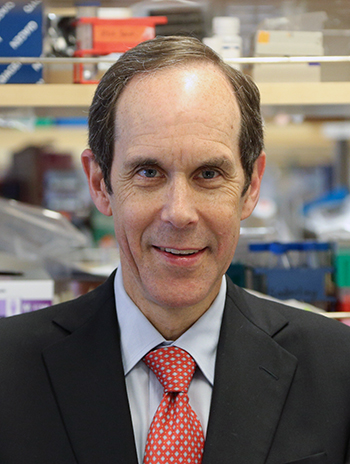
Professor Brian J. Druker, M.D.
Professor of Medicine
Director of Knight Cancer Institute,
Oregon Health & Science University
USA
Professor Brian J. Druker, M.D. made a significant research discovery in the field of targeted cancer therapy. He developed a prototype drug called “Imatinib” for treatment of chronic myeloid leukemia (CML).
Imatinib inhibits BCR-ABL, a specific protein that is only detected in cells of CML patients, not in a normal cell. This specificity can thus minimise a side effect during treatment. From a laboratory research, the drug has been tested on animals and humans and has been found to reduce severity, mortality and morbidity from CML. Without imatinib, CML patients usually deteriorate and die within 3 years. Currently, other drugs for targeted therapy have been developed for treatment of other cancers
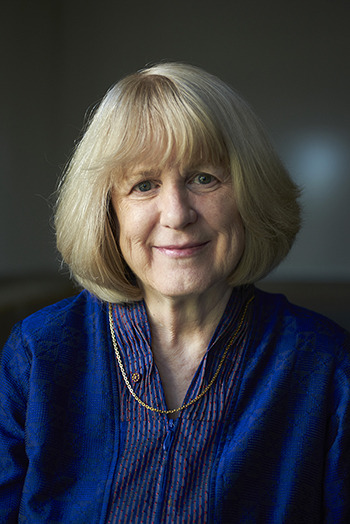
Professor Dr. Mary-Claire King, Ph.D.
Professor of Medical Genetics
Department of Medicine, School of Medicine,
University of Washington
USA
Professor Dr.Mary-Claire King, Ph.D. discovered a gene causing breast cancer, the most common cancer among women. Each year, there are over 2 million new cases of breast cancer resulting in 200,000 deaths.
In 1991, Prof. King found a gene called BRCA1 in which its mutation leads to breast cancer. Therefore, it was demonstrated for the first time that the diseases can be inherited. The genetic testing can help screen people at risk of breast cancer in order to rapidly diagnose, monitor or effectively treat it at its early stages. Later, more breast cancer-related genes, e.g. BRCA2, were identified and Prof. King was often involved in those findings. However, mutations in BRCA1 remains the most common cause of breast cancer among patients. Prof. King also worked with researchers at the University of Washington to develop an affordable genetic test for breast cancer so that more people can have access to screening.
The Prince Mahidol Award recognises the great discoveries by Prof. Brian J. Druker, for a prototype drug used for treatment of CML that advances the development of targeted therapy, and by Prof. Dr. Mary-Clair King, for identifying the most common and hereditable gene related to breast cancer as well as developing a breast cancer gene detection kit to provide effective screening and monitoring for people at risk. These findings demonstrate the high impact of basic research, diagnosis, and treatment of common cancers, and thus improves the quality of life for mankind and reduces the mortality rates of CML and breast cancer among millions of people worldwide.
Prince Mahidol Award Laureate 2018
In the Field of Public Health
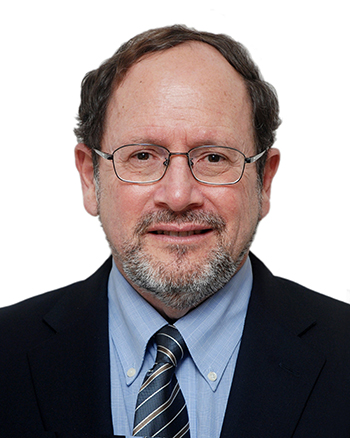
Professor John D. Clemens, M.D.
Director, International Centre for Diarrhoeal Disease Research, Bangladesh (icddr,b)
Bangladesh
Adjunct Professor of Epidemiology,
University of California Los Angeles
USA
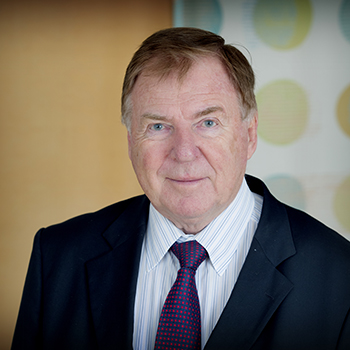
Professor Jan R. Holmgren, M.D., Ph.D.
Professor of Medical Microbiology and Immunology
Director of the Gothenburg University Vaccine Research Institute (GUVAX)
Sweden
Professor John D. Clemens, M.D. and Professor Jan R. Holmgren, M.D., Ph.D. worked jointly for over 30 years to study and develop oral cholera vaccine (OCV).
Cholera is a gastrointestinal disease due to bacterial infection. The worldwide spread, or pandemic, occurred for the first time in the 19th century, and there have been 7 pandemics till now. Millions of people have died from cholera. Injectable vaccines have been used to prevent cholera for a long period despite low efficacy. During the 1970s, Prof. Holmgren demonstrated that an important immunity against cholera is IgA produced on the mucosal surface of intestines. Thus, oral vaccines would be more efficient in inducing protection than injectable vaccines. Prof. Clemens played an important role to clinically prove the efficacy of OCV. As a result, WHO has recommended that cholera vaccines should be given orally and discontinued the use of injectable vaccines.
The first OCV was called Dukoral. However, it was expensive and difficult to administer with a protection efficacy of only 50% and only lasted 2 years. During the 2000s, Prof. Clemens and Prof. Holmgren produced a new OCV known as Shanchol. This new vaccine was cheap and provided a protection of up to 5 years. In addition, they demonstrated the concept of “herd immunity” by which providing vaccinations to at least 60% of the population can prevent on outbreak. This is because the vaccinated population can reduce incidences of disease so that the unvaccinated population would have much less of a chance of contracting the disease. Therefore, diseases can be controlled even not all of population are vaccinated. With this concept, WHO has recommended Shanchol vaccine for countries struggling to control cholera since 2010. In 2013, WHO and GAVI established an OCV stockpile to prevent a spread of cholera especially when there is a threat or a disaster-level situation. For example,
the use of OCV among several hundreds of thousands of people in Haiti after hit by Hurricane Matthew in 2016 and in Bangladesh after a heavy influx of Rohingya following the migration crisis in 2017 was believed to have helped prevent an epidemic of cholera.
A significant discovery from basic research and clinical test regarding vaccines against cholera has been approved by WHO. Prof. John D. Clemens and Prof. Jan R. Holmgren have made a great impact by recommending that cholera vaccines, be provided orally rather than injected. This also led to the establishment of an OCV stockpile to support countries at risk of or affected by the spread of cholera to help save the lives of millions of people worldwide.
Source: http://www.princemahidolaward.org/index.en.php