

A New Paradigm of Hope: Elevating the Management of Advanced Ovarian Cancer Utilizing the HIPEC Procedure at Siriraj Hospital
Authors:
Assistant Professor Boonlert Viriyapak, M.D.
Department of Obstetrics and Gynecology

Lecturer Khemanat Khemworapong, M.D.
Department of Obstetrics and Gynecology
Ovarian cancer represents a highly insidious disease, often regarded as a formidable “silent killer” among women. Because it is frequently asymptomatic in its early stages, a substantial proportion of patients (approximately over 70%) are diagnosed at an advanced stage (Advanced Ovarian Cancer), commonly presenting with peritoneal carcinomatosis. The therapeutic management of this advanced stage is highly complex and necessitates a multidisciplinary team of elite medical specialists.
Currently, Siriraj Hospital has implemented cutting-edge medical innovations to optimize survival outcomes and enhance the quality of life for these patients. One of the most prominent techniques demonstrating tangible clinical efficacy is Hyperthermic Intraperitoneal Chemotherapy (HIPEC).
What is HIPEC?
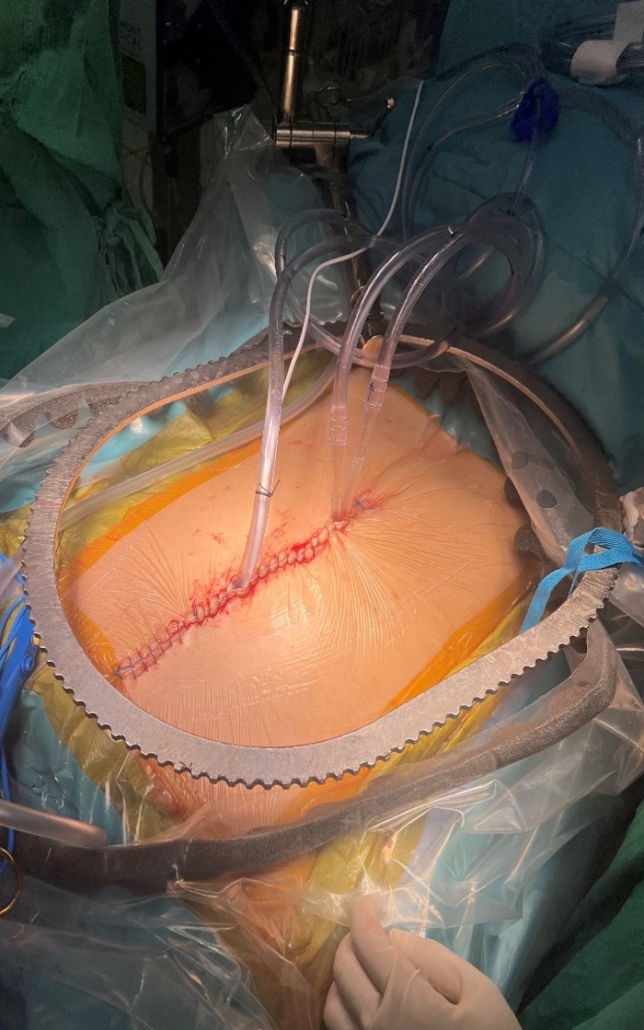
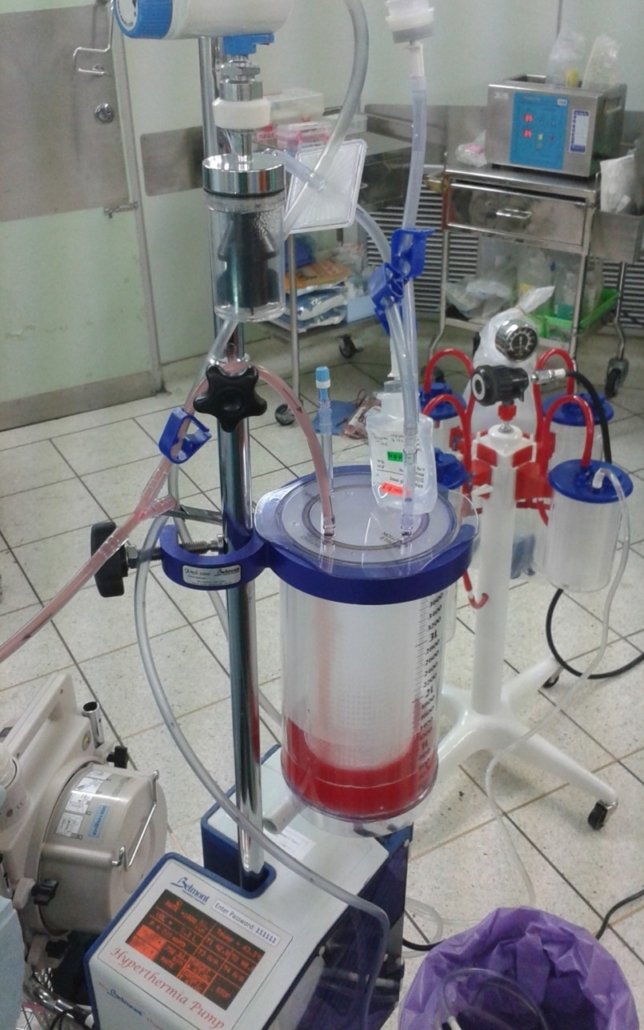
HIPEC is an innovative therapeutic modality that integrates cytoreductive surgery (maximizing macroscopic tumor resection) with the intraoperative, direct intra-abdominal circulation of heated chemotherapeutic agents (optimally maintained between 41°C and 43°C) immediately following tumor extirpation. The hyperthermia facilitates enhanced tissue penetration of the chemotherapy throughout the peritoneal cavity before it subsequently absorbs into the systemic circulation. This process effectively eradicates residual microscopic or visually undetectable malignant cells post-resection, demonstrating superior efficacy compared to postoperative intravenous chemotherapy administration alone.
The Clinical Role of HIPEC in Ovarian Cancer
The integration of HIPEC has gained widespread international acceptance, prominently bolstered by clinical data from a 2018 Dutch trial. This landmark study reported the therapeutic efficacy and survival benefits of combining HIPEC with surgery, demonstrating an extension of overall survival by 11.8 months compared to interval debulking surgery (IDS) alone following 3 to 4 cycles of primary neoadjuvant chemotherapy1. Consequently, Siriraj Hospital has progressively developed and refined the HIPEC technique for gynecologic oncology patients since its inaugural case in 2012. A comprehensive data analysis of advanced ovarian cancer patients who underwent the HIPEC procedure at Siriraj Hospital from 2012 to 2026, comprising a total of 51 cases with a maximum longitudinal follow-up of 60 months, yielded the following compelling clinical outcomes:
* Optimal Cytoreduction: The surgical success rate for achieving optimal cytoreduction (complete macroscopic resection or residual disease of less than 2.5 mm) coupled with the successful administration of HIPEC was accomplished in 48 patients (94.1%).
* Progression-Free Survival (PFS): The median duration patients remained disease-free without recurrence or progression was 23 months.
* Stratified by treatment modality, the cohort undergoing Primary Surgery (Primary Debulking Surgery, PDS) demonstrated a median PFS of 18 months.
* Conversely, the cohort receiving Neoadjuvant Chemotherapy (NACT) prior to surgery exhibited a significantly prolonged median PFS of 34 months, reflecting survival trajectories indicating a superior disease-free trend for the NACT group.
* Overall Survival (OS): The overarching survival profile for patients treated with this modality is exceptionally favorable, to the extent that the median OS was “Not Reached” (meaning that more than half of the patients remain alive and in favorable health beyond the follow-up period of data analysis).
* For the Primary Surgery cohort, the median OS was remarkably high at 57 months.
* For the Neoadjuvant Chemotherapy (NACT) cohort, clinical outcomes were similarly excellent, with the median OS also reported as “Not Reached.”
This clinical milestone is the direct culmination of relentless efforts in refining surgical techniques and chemotherapeutic administration protocols. It heavily relies on seamless multidisciplinary collaboration in both diagnostic and surgical phases, meticulously spearheaded in partnership with the Division of Minimally Invasive General Surgery, Department of Surgery, Faculty of Medicine Siriraj Hospital, Mahidol University.
Future Directions for Expanding Patient Quality of Life
These statistical outcomes transcend mere academic metrics; they serve as empirical validation of Siriraj Hospital’s absolute dedication to integrating the HIPEC innovation with personalized therapeutic planning. The ultimate objective is to maximize progression-free survival and optimize overall survival rates.
Siriraj Hospital remains steadfast in its commitment to ceaselessly advancing its medical capabilities and infrastructure, ensuring that patients battling advanced ovarian cancer retain hope, reclaim their smiles, and successfully reintegrate into a high-quality life alongside their families.
***
Reference:
1. Van Driel WJ, Koole SN, Sikorska K, et al. Hyperthermic intraperitoneal chemotherapy in ovarian cancer. *N Engl J Med* 2018; 378: 230-40.