
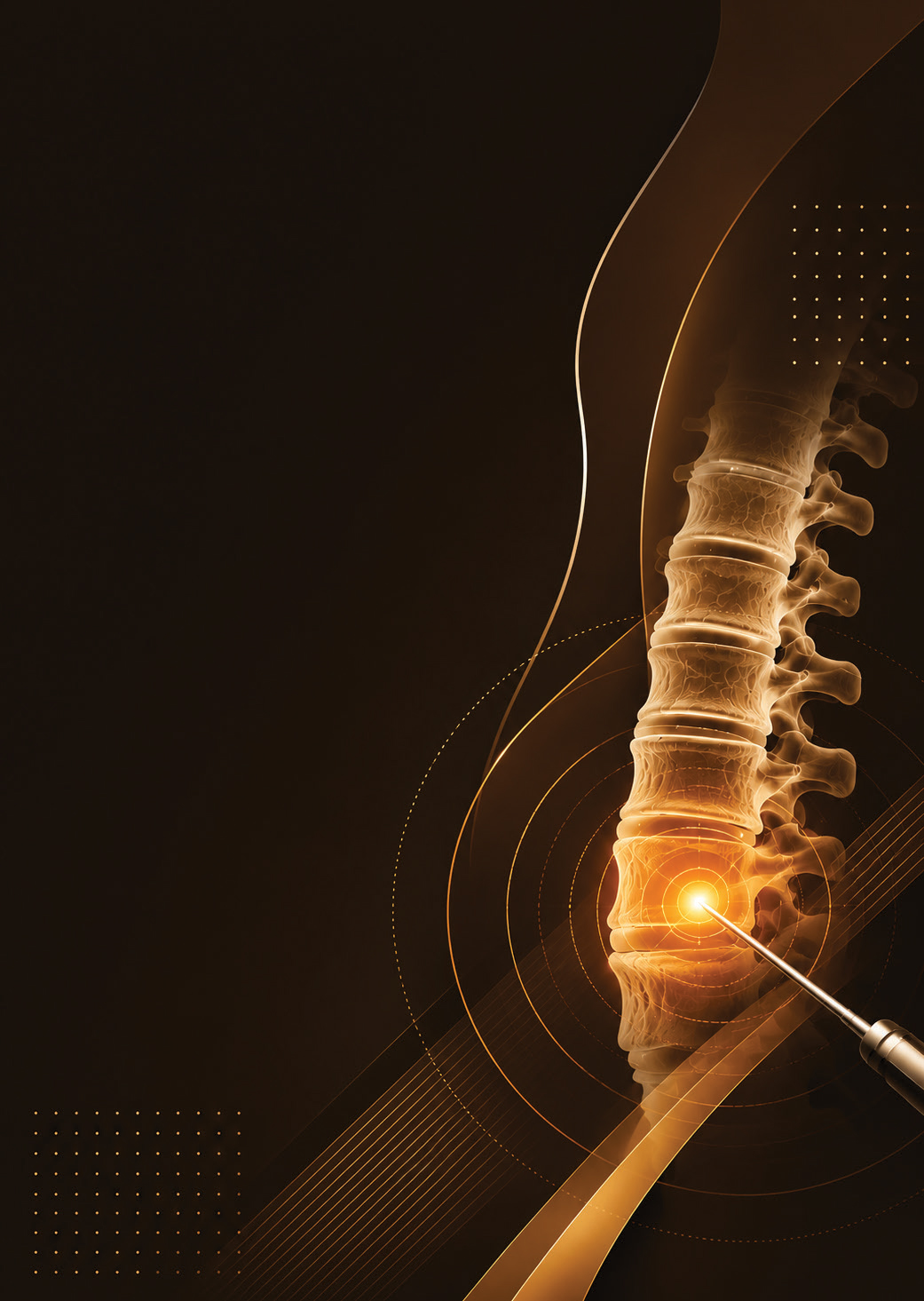
Basivertebral Nerve Ablation (BVNA): A Novel Alternative for Chronic Back Pain Secondary to Vertebral Degeneration

Associate Professor Nantthasorn Zinboonyahgoon, MD
Siriraj Pain Clinic, Department of Anesthesiology
Faculty of Medicine Siriraj Hospital, Mahidol University
Chronic lower back pain remains a critical global public health crisis. Epidemiological data indicate that over 80% of the global population has experienced this condition, with more than 560 million individuals currently enduring chronic pain. This burden severely impacts patients’ quality of life, psychological well-being, and occupational capacity.
While most patients experience improvement through conservative management—such as rest, analgesic medications, or physical therapy—a distinct subset suffers from refractory pain without definitive surgical indications. These patients effectively fall into a “treatment gap,” enduring continuous pain without a targeted therapeutic solution.
🔹 The BVNA Innovation for Vertebrogenic Pain
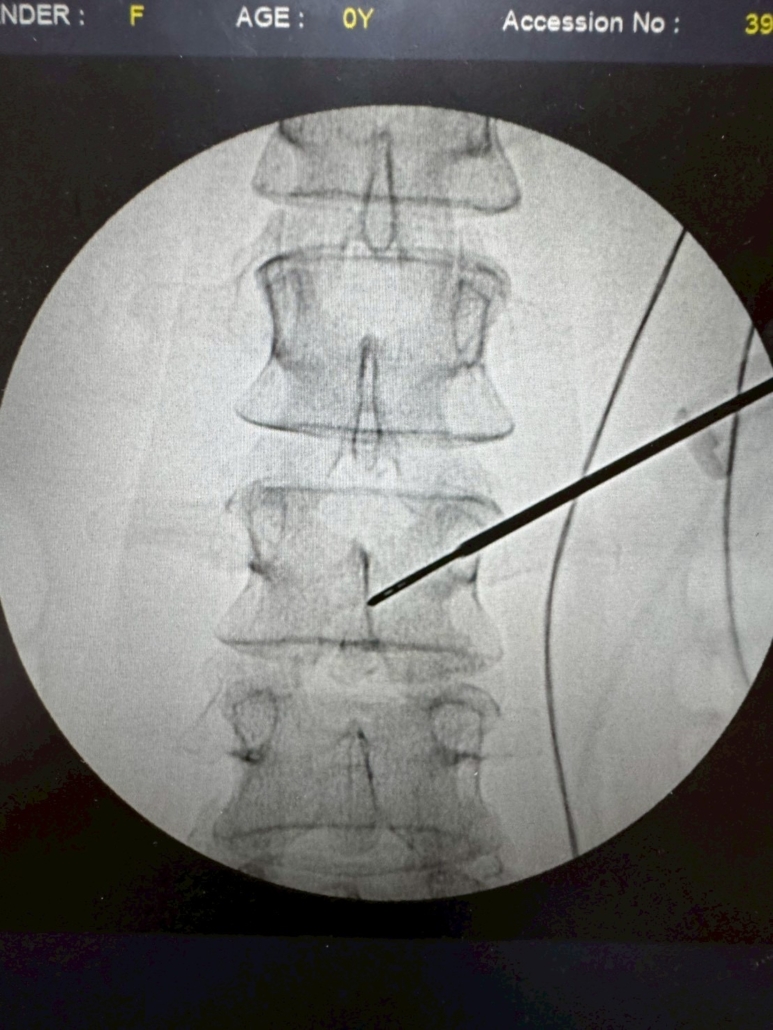
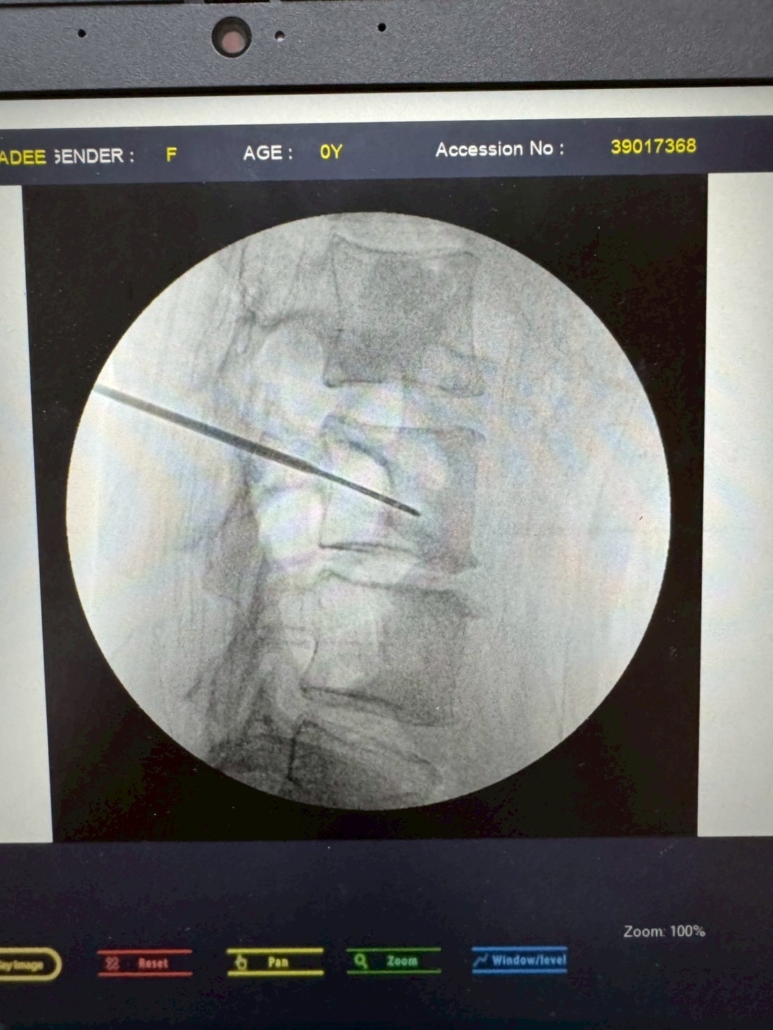
The Basivertebral Nerve Ablation (BVNA) procedure was developed to specifically address back pain originating from vertebral bone degeneration (vertebrogenic pain). This minimally invasive procedure utilizes high-frequency radio waves (radiofrequency) to ablate the nerve within the vertebral bone tissue, effectively disrupting the nociceptive signaling pathway.
• Safety Profile: This procedure carries a low risk profile and does not require general anesthesia. Medications may be administered to alleviate anxiety and provide analgesia during the procedure. Patients can return home immediately afterward. A potential transient side effect is radiating leg pain (occurring in approximately 10% of cases), which is generally self-limiting.
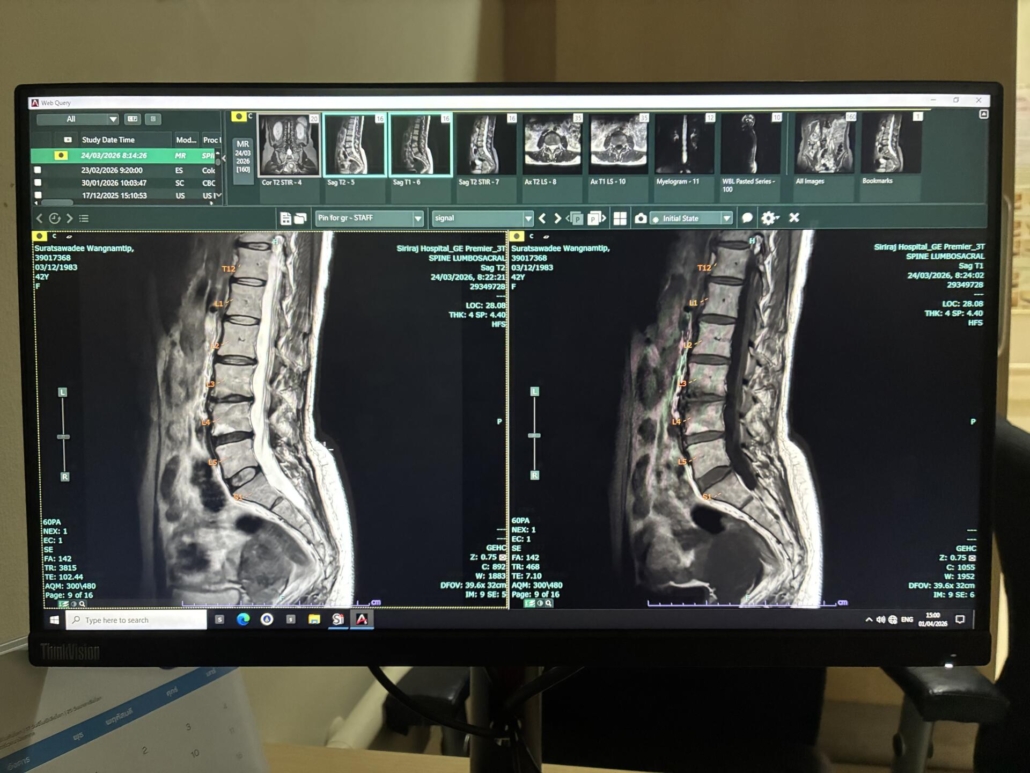
• Indications: BVNA is indicated for patients with chronic back pain lasting longer than 6 months, accompanied by specific vertebral bone changes detected on MRI at the L3-S1 levels (Modic Changes Type 1-2). However, this procedure is not suitable for individuals with vertebral compression or severe osteoporosis.
🔹 Empirical Evidence
In the United States, this procedure has gained recognition for reimbursement, as studies confirm its cost-effectiveness over long-term treatment with medications and physical therapy. Data demonstrate that a single intervention allows approximately 70% of treated patients to experience sustained clinical improvement for at least 5 to 6 years.
🔹 A Major Milestone for Thailand
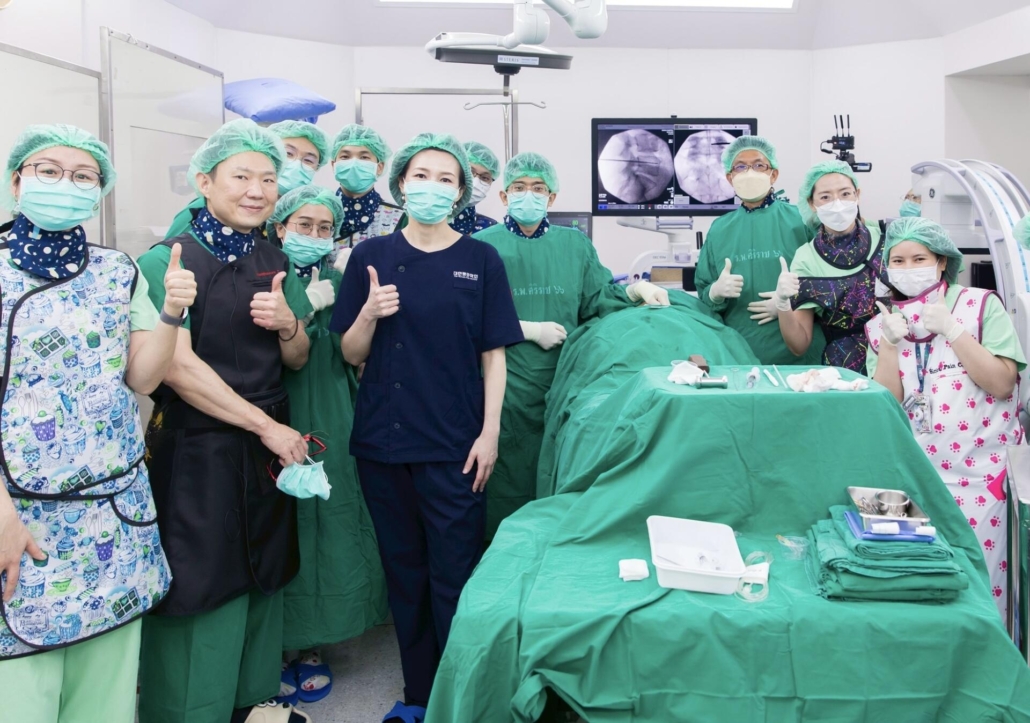
For Thailand, on February 5, 2026, the Siriraj Pain Clinic, in collaboration with Seoul National University and led by Dr. Jee Youn Moon, successfully conducted a proctored demonstration and performed the first two BVNA cases in the country. Subsequently, the clinical rollout has expanded across both Siriraj Hospital and Siriraj Piyamaharajkarun Hospital, totaling 4 cases currently.
Based on the precise clinical follow-up of all 4 patients, they reported a pain reduction of more than 50% up to 100%. They have successfully been able to reduce their reliance on analgesic medications, return to their daily activities without pain more effectively, and experienced strictly zero complications from the treatment.
This definitive success elevates Thailand to rank among the first groups of countries in Asia to adopt this technology, alongside South Korea and Indonesia. Although BVNA is not yet covered for reimbursement under current domestic healthcare welfare schemes, it is considered a groundbreaking innovation and beacon of hope that elevates chronic back pain management in Thailand to an equivalent international standard.