




House Dust Mite Sublingual Immunotherapy in Thai Allergic Rhinitis
Authors:
Lecturer Dichapong Kanjanawasee, MD, PhD
Department of Parasitology
Associate Professor Mongkhon Sompornrattanaphan, MD
Department of Medicine
Introduction and Rationale
Allergic rhinitis (AR) affects approximately 20% of the global population, significantly impairing patients’ quality of life. In Thailand, the prevalence of this condition is reported to exceed 40% in certain demographic cohorts and exhibits a continuous upward trend. The principal aeroallergens triggering these symptoms are house dust mites (HDM), specifically *Dermatophagoides pteronyssinus* (*Dp*) and *Dermatophagoides farinae* (*Df*), which are highly prevalent throughout Thailand and the broader Southeast Asian region.
Allergen immunotherapy (AIT)—commonly referred to clinically as an “allergy vaccine”—represents a pivotal therapeutic intervention for patients who remain symptomatic despite optimal standard pharmacotherapy. AIT aims to modulate the allergen-specific immune response and potentially alter the long-term natural trajectory of the disease.
However, real-world evidence regarding the clinical application of house dust mite sublingual immunotherapy (HDM-SLIT) in this geographical region remains limited. Consequently, this study aimed to evaluate the real-world effectiveness and safety of the SQ HDM-SLIT tablet (Acarizax) in Thai patients.
Methods
This was a multicenter, open-label prospective study conducted across 5 tertiary care hospitals in Thailand from August 2020 to March 2022. The study cohort comprised 49 patients aged 18 to 65 years who were diagnosed with moderate-to-severe persistent allergic rhinitis and possessed confirmed allergic sensitization to HDM.
Patients were administered one SQ HDM-SLIT tablet daily and were longitudinally evaluated at baseline, and at 1, 2, and 4 months post-initiation. Efficacy assessments utilized the total nasal symptom score (TNSS), total symptom score (TSS), and total combined rhinitis score (TCRS). Immunological evaluations included quantifying HDM-specific immunoglobulin E (sIgE) and immunoglobulin G4 (sIgG4) levels. Treatment-related adverse events were also systematically documented.
Key Results
Of the 49 enrolled patients, 42 successfully completed the 4-month follow-up period. The cohort presented a mean age of 31.9 years, was predominantly female (59.5%), and 19.0% presented with comorbid asthma. All evaluated patients (100%) were sensitized to Dp, and 95.2% were co-sensitized to both Dp and Df.
Following the 4-month therapeutic course, allergic symptoms decreased significantly: the TNSS decreased by 69.5%, the TSS by 71.6%, and the TCRS by 60.3%. Significant clinical amelioration was definitively observed as early as the first month of treatment, with a continuous trajectory of improvement maintained throughout the follow-up period.
Immunological assays revealed an elevation in HDM-specific IgE levels, consistent with the anticipated early immunological response during the initial phase of AIT. Concurrently, HDM-specific IgG4 levels exhibited an upward temporal trend, although this did not reach statistical significance within the observed timeframe.
Treatment-related adverse events were reported in 83.3% of patients. These were predominantly characterized as local reactions, such as oral and sublingual pruritus or edema. The majority of these local adverse events emerged during the initial phase of treatment and resolved spontaneously within 2 months. Notably, no systemic reactions or serious adverse events (SAEs) were observed.
Conclusion
The clinical application of the SQ HDM-SLIT tablet demonstrates robust efficacy in mitigating AR and overall allergic symptoms, with definitive clinical improvements manifesting as early as the first month of therapy. It is highly acceptable and pragmatic for real-world clinical practice. The safety profile is reassuring; although local adverse effects are frequently observed, the vast majority are mild in severity and self-limiting.
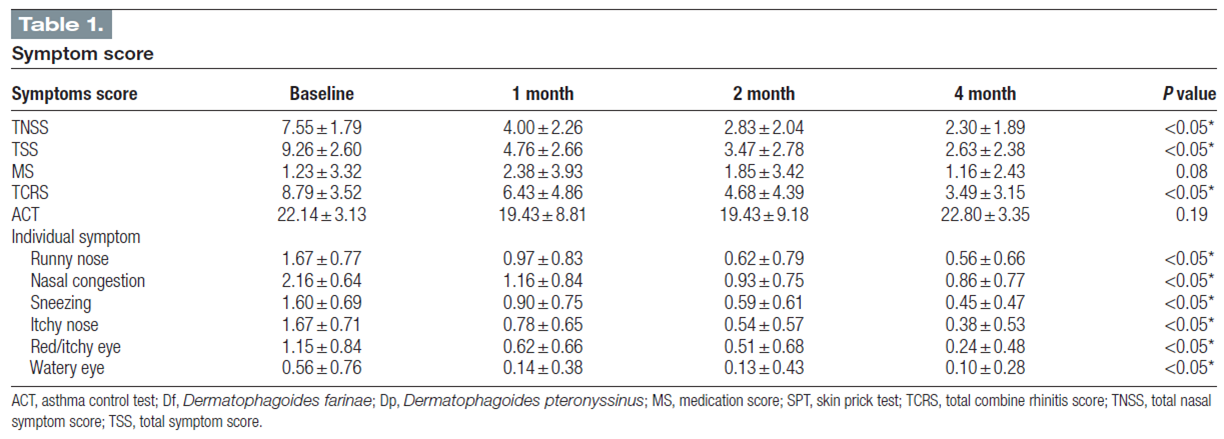
Table 1. Changes in symptom scores, medication scores, and asthma control test scores during the follow-up period
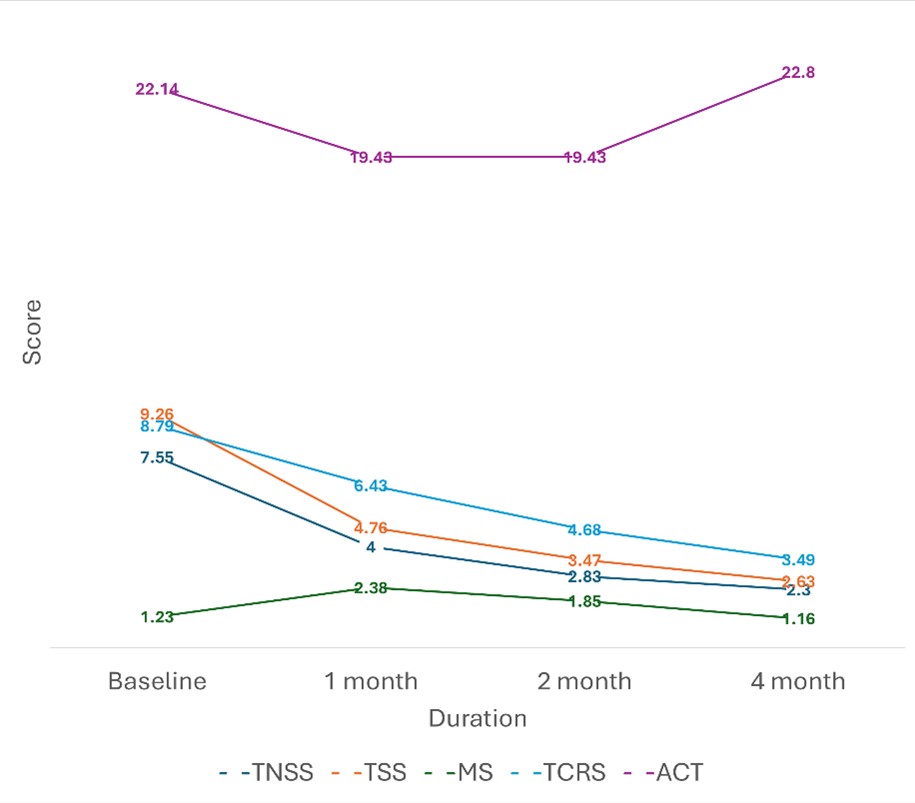
Figure 1. Alterations in symptom scores and medication scores at baseline, and at 1, 2, and 4 months post-treatment initiation
Abbreviations: ACT, asthma control test; AIT, allergen immunotherapy; *Df*, *Dermatophagoides farinae*; *Dp*, *Dermatophagoides pteronyssinus*; HDM, house dust mite; HDM-SLIT, house dust mite sublingual immunotherapy; IgE, immunoglobulin E; IgG4, immunoglobulin G4; MS, medication score; TCRS, total combined rhinitis score; TNSS, total nasal symptom score; TSS, total symptom score.
Reference
Kanjanawasee D, Sompornrattanaphan M, Thongngarm T, et al. House dust mite sublingual immunotherapy in Thai allergic rhinitis. Asia Pacific Allergy. 2026. doi:10.5415/apallergy.0000000000000278
†Dichapong Kanjanawasee and Mongkhon Sompornrattanaphan
equally to this article as co-first authors.