
Stroke Coach: When Youth Become “Household Stroke Coaches”
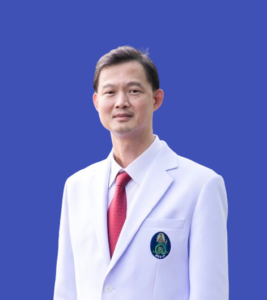
Author: Associate Professor Yongchai Nilanont, MD
Director of Siriraj Stroke Center
Stroke and the Challenges in Thailand
Stroke remains a leading cause of mortality and long-term disability among the Thai population. Despite continuous advancements in acute therapeutic interventions, the primary challenge remains rooted in “prevention”—specifically, enhancing health literacy regarding vascular risk factors and promoting daily behavioral modifications. Modifying health behaviors is inherently complex, as many lifestyle habits are deeply ingrained since childhood. Although healthcare professionals can provide clinical recommendations and medical treatments, the brief encounters during outpatient visits are insufficient to truly reverse deeply rooted lifestyle behaviors. Therefore, the most potent influence for behavioral change is not derived solely from medical advice, but from “the individuals the patients love, trust, and cohabit with daily”—most notably, family members, specifically their children and grandchildren.
When Loved Ones Become Agents of Change
Consequently, the Siriraj Stroke Center, in collaboration with the Thaicom Foundation, initiated the “Stroke Coach” project. This was founded on the core principle that stroke prevention should not commence when a patient arrives at the hospital, but rather must begin at home. One of the vital driving forces for this transformation is our youth.
The Stroke Coach project operates on the belief that youth are not merely passive recipients of health education but capable “agents of change”. Through the innate bonds, proximity, and emotional attachments within families, subtle encouragement from a child—such as prompting dietary adjustments, ensuring medication adherence, encouraging physical activity, monitoring routine blood pressure, and advocating for general health—exerts a far greater impact than sporadic clinical advice in consultation rooms. When stroke prevention knowledge is passed down through the “next generation” to parents and grandparents, disease prevention transcends the passive dispensing of information. It evolves into actual, real-life familial care, ultimately fostering sustainable behavioral modifications.
From Youth to Behavioral Modification: The Stroke Coach Concept
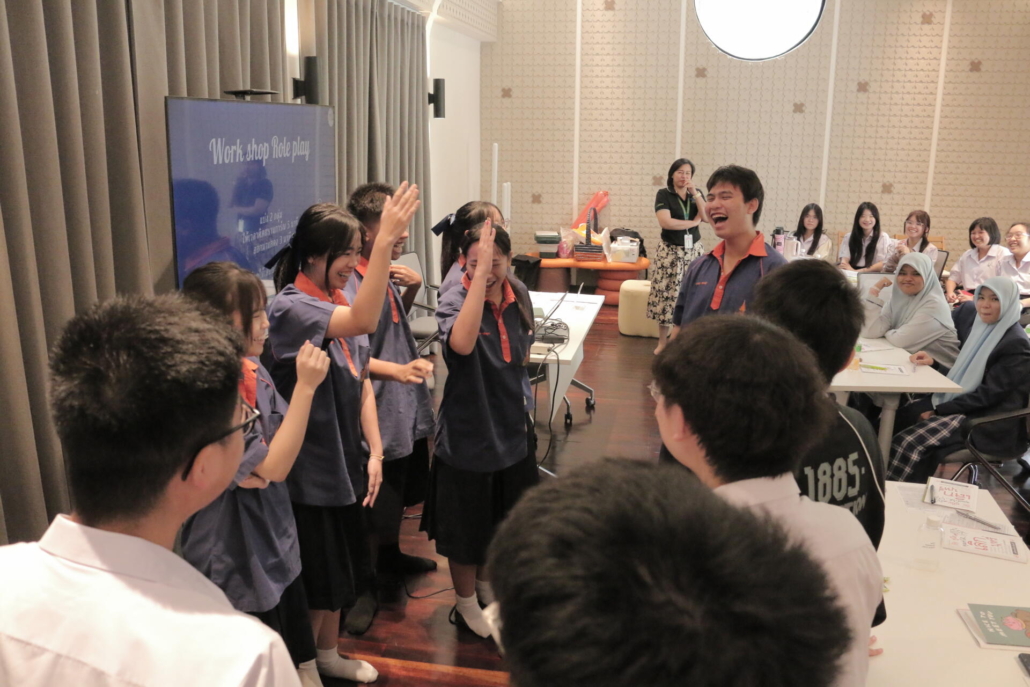
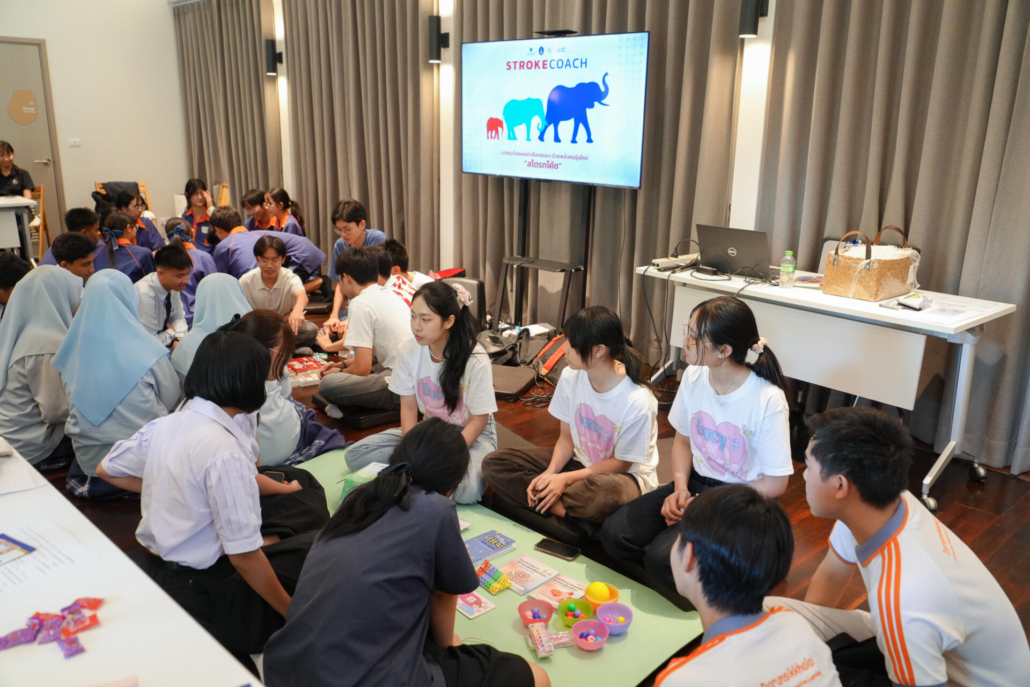
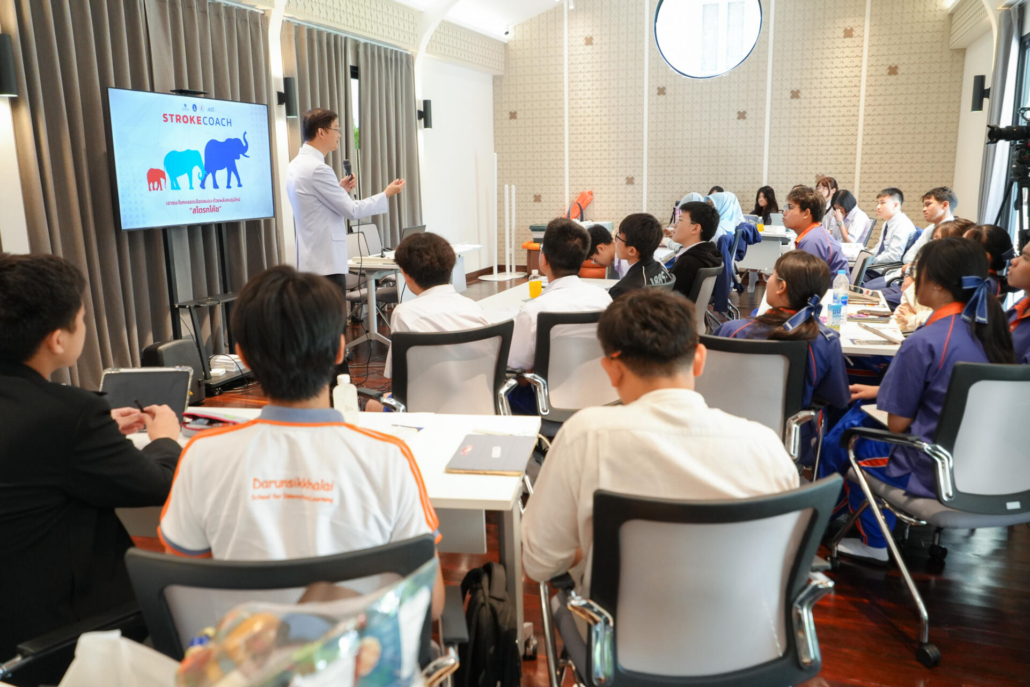
The Stroke Coach initiative represents a health promotion model designed to transform primary and secondary school students from conventional “learners” into Household Stroke Coaches. This is achieved through interactive workshops, health literacy education, and practical, hands-on caregiving for their own family members. The core of the project relies on the “4 Diseases, 6 Behaviors” framework, equipping youth with a systematic understanding of stroke risk factors. It encompasses paramount vascular comorbidities: hypertension, diabetes mellitus, dyslipidemia, and cardiac arrhythmias, juxtaposed with highly prevalent modifiable risk behaviors: obesity, physical inactivity, smoking, alcohol consumption, chronic psychological stress with inadequate rest, and insufficient fruit and vegetable consumption.
Within the program, selected students are developed into “Head Coaches” utilizing a Train-the-Trainer model before disseminating this knowledge to peers, participants, and household members. Each participating school establishes a core team of 5 student leaders and 20–30 Stroke Coaches, who collaborate closely with their families through continuous health behavior monitoring, health risk assessments, and health promotion activities.
This framework reflects a novel paradigm in primary prevention: “imparting knowledge simultaneously with active implementation by family members.” It shifts the focal point from the passive receipt of health information to active, household-level implementation.
One Coach, One Family: Expanding Education into the Community
The hallmark of the Stroke Coach model is its cascading impact—originating from a single individual and expanding to the family, the community, and society at large. Trained youth are not merely knowledge receptors; they act as conduits, translating didactic health education into actionable practices for their inner circles. They empower family members to recognize modifiable risk factors, identify acute stroke warning signs, and comprehend the clinical urgency of primary prevention prior to a catastrophic cerebrovascular event.
During the project’s pilot phase, the cohort comprised over 1,100 high school students and family members. This represents a monumental step in creating a prototypical model for stroke prevention that seamlessly interconnects the school, the family, and the healthcare system.
Co-Creating a Stroke-Literate Thai Society
Because stroke prevention is not the exclusive domain of physicians and cannot be accomplished entirely within a brief clinical encounter, it necessitates consistent support, monitoring, and motivation from close companions in daily life. Thus, the Stroke Coach project does not aim merely to generate a single cohort of participants; rather, it strives to cultivate “stroke awareness” that emanates from familial love, care, and the dynamic energy of the younger generation, before scaling to the broader community.
Although specific recruitment cycles may conclude, stroke education has no expiration date. Interested individuals can access ongoing activities and stroke prevention resources via the Facebook page Siriraj Stroke Center and the Stroke Learning Hub (https://strokelearninghub.com/), which curates evidence-based content for healthcare professionals, the general public, youth, and Stroke Coaches—empowering everyone to initiate their role as a “coach” for themselves and their loved ones starting today.
The Future of Stroke Prevention Begins at Home
The Siriraj Stroke Center holds a profound conviction that instilling health awareness from a young age not only mitigates future cerebrovascular risks but also serves as a vital, long-term public health investment. It cultivates a health-literate population capable of self-care and familial health management, collectively driving Thai society toward highly sustainable primary stroke prevention.