
The First Halcyon Version 5 Cancer Treatment Technology in Asia
By Lecturer WIWATCHAI SITTIWONG, M.D.
Division of Radiation Oncology, Department of Radiology
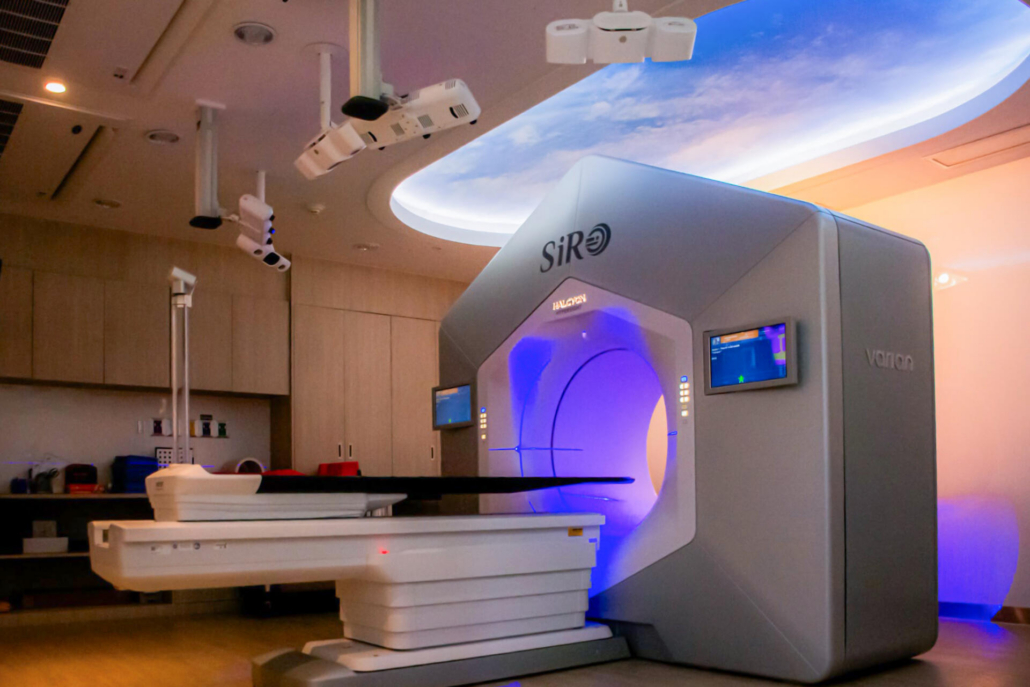
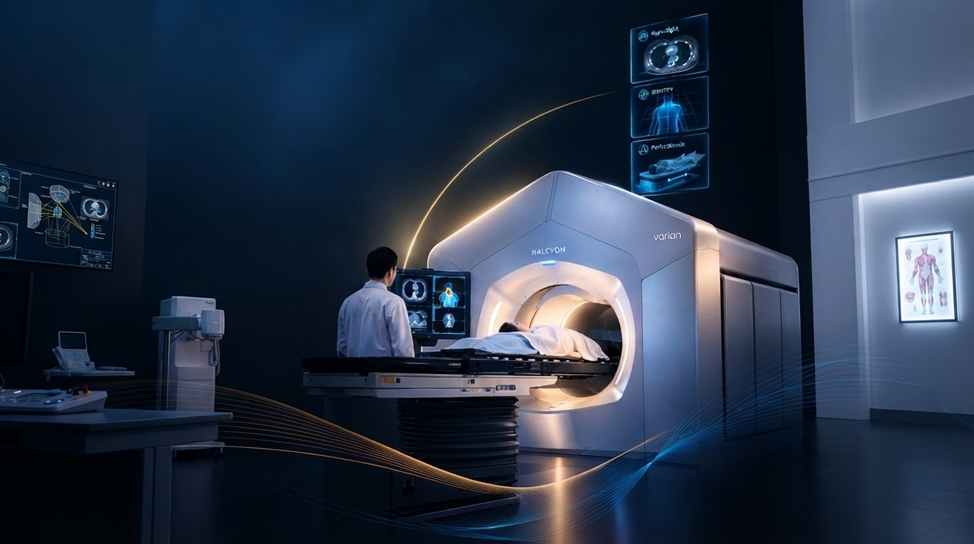
Radiation therapy is one of the primary modalities in cancer treatment. The fundamental objective is to maximize the radiation dose delivered to the tumor while minimizing exposure to surrounding normal tissues. To this end, the Faculty of Medicine Siriraj Hospital, Mahidol University, has introduced the Halcyon Version 5—the latest ring-gantry linear accelerator from Varian (a Siemens Healthineers company)—for clinical use, marking its first installation in Asia. The hallmark of this system is the integration of three advanced innovations into a single platform: HyperSight, a high-speed imaging system delivering high-contrast images comparable to conventional CT scans within seconds, enabling physicians to clearly visualize the tumor and adjacent organs prior to every treatment fraction; the IDENTIFY system, a real-time patient motion tracking system that automatically pauses beam delivery if the patient moves beyond predefined tolerances; and PerfectKinetix, a multi-directional treatment couch that facilitates precise patient positioning and targeted treatment alignment.
For patients, the most tangible benefit is a significantly shorter duration spent on the treatment couch. Rapid imaging paired with the ring-gantry design, which allows for continuous rotational beam delivery, helps reduce the discomfort and fatigue associated with daily treatments. The heightened precision also serves to minimize radiation-induced side effects to normal tissues. Furthermore, the system supports Adaptive Radiotherapy (ART), allowing treatment plans to be dynamically adjusted in response to volumetric changes in the tumor. This enables a more highly personalized treatment approach for each patient while permitting the hospital to accommodate a larger daily patient throughput without compromising the quality of clinical care.
The Halcyon Version 5 is indicated for treating a wide array of malignancies, including breast, lung, head and neck, gastrointestinal and hepatobiliary, and prostate cancers, as well as gynecologic malignancies such as cervical cancer. Patients who stand to benefit particularly include those whose tumors change in size during the course of treatment, such as in pelvic malignancies; patients with tumors located in close proximity to critical organs requiring high-precision delivery; individuals undergoing extended courses of radiotherapy who require mid-course plan adaptations; and those with mobility limitations or difficulties remaining still for prolonged periods. Crucially, this treatment technologyis accessible to patients across all healthcare coverage schemes—whether through the Universal Coverage Scheme (Gold Card), the Social Security Scheme, the Civil Servant Medical Benefit Scheme, or self-payment. This ensures that every patient has an equal opportunity to receive treatment with state-of-the-art medical technology.
Every instance of integrating new technology at Siriraj marks another significant milestone for a public hospital in leveraging medical advancements to expand treatment access for patients and the public. Ultimately, regardless of how advanced medical technology becomes, our unwavering commitment remains constant: ensuring that patients have access to high-quality care and receive the best possible treatment. This has always been the fundamental objective of Siriraj Hospital.
Being the first institution in Asia to implement this system reflects Siriraj’s readiness in terms of clinical knowledge, personnel, and infrastructure, standing on par with the world’s leading institutions. Our team of physicians, medical physicists, and radiation therapists will accumulate vital clinical experience and translate it into novel research. This will further elevate the standard of radiation oncology in Thailand and reaffirm our position as a medical leader in the region.