
Breakthrough Metabolomics Study Highlights Hidden Gut Toxins in Peritoneal Dialysis Patients
Congratulations
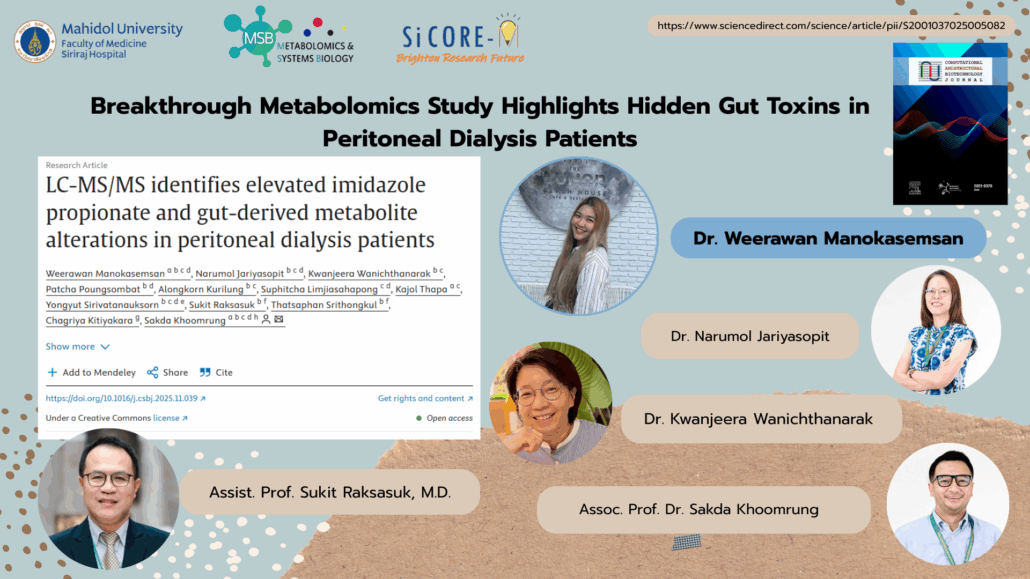
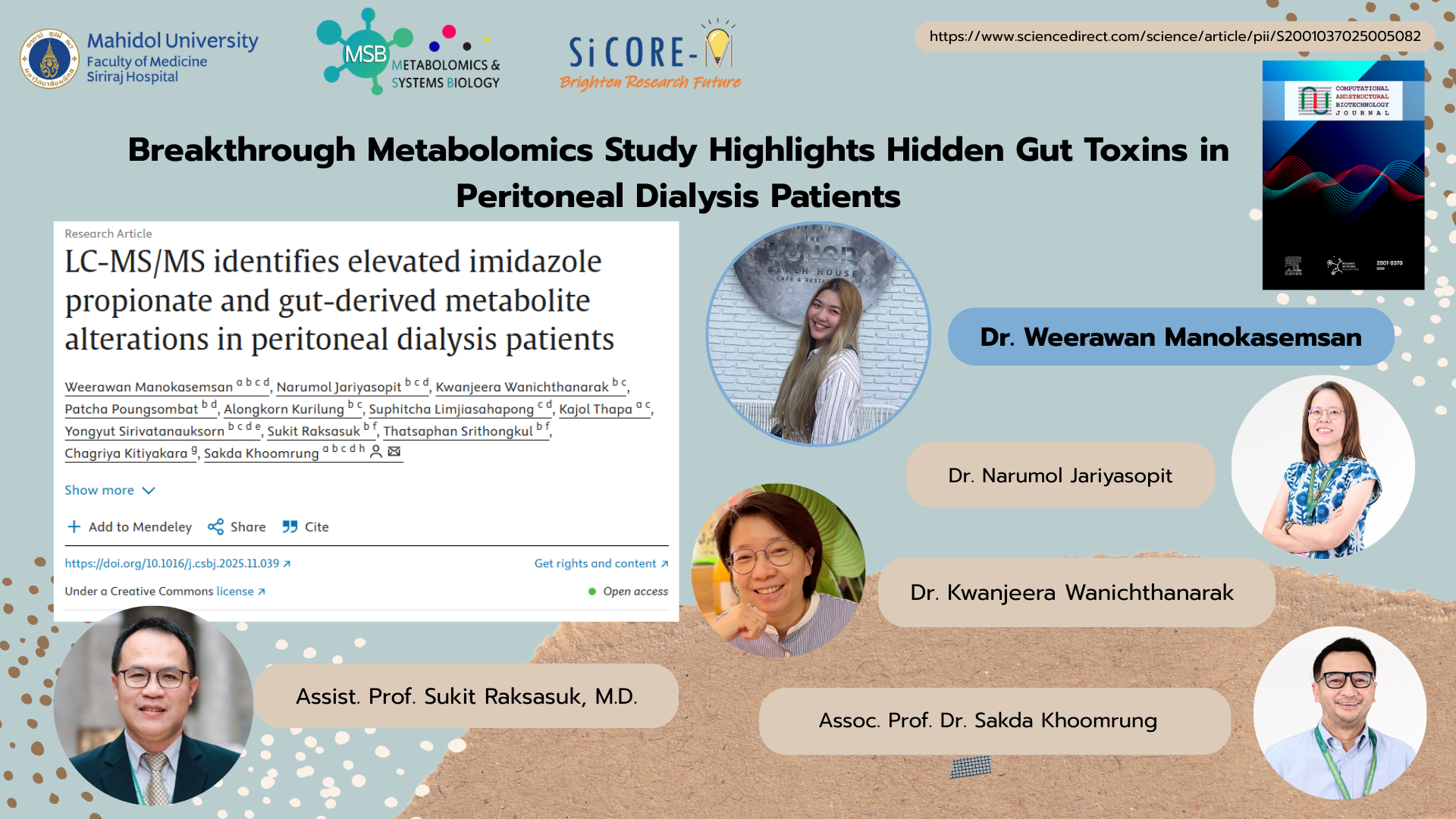
Congratulations to Dr. Weerawan Manokasemsan, Dr. Narumol Jariyasopit, Dr. Kwanjeera Wanichthanarak, Asst. Prof. Dr.Sukit Raksasuk, and Assoc. Prof. Dr. Sakda Khoomrung of SiCORE-MSB and SiMPC, Faculty of Medicine Siriraj Hospital, Mahidol University, on their latest publication in the Computational and Structural Biotechnology Journal (November 17, 2025):
“LC-MS/MS identifies elevated imidazole propionate and gut-derived metabolite alterations in peritoneal dialysis patients.”
Read here https://www.sciencedirect.com/science/article/pii/S2001037025005082
Study Highlights
Chronic kidney disease continues to rise worldwide, and many kidney-failure patients rely on peritoneal dialysis (PD). However, new evidence suggests that gut-derived toxins may still accumulate despite treatment—with one metabolite standing out: Imidazole propionate (ImP).
Using a high-sensitivity LC–MS/MS workflow, the team quantified 16 uremic toxins and 14 bile acids in blood and stool samples simultaneously. One of the most striking findings is that ImP levels are markedly elevated in PD patients, including those without diabetes or cardiovascular disease.
ImP has previously been associated with metabolic dysfunction and cardiovascular risk, but this study reveals that kidney failure itself may drive ImP accumulation, making it a promising candidate as a novel risk marker in CKD.
These insights open the door to improved patient risk stratification and potential future interventions—ranging from dietary modulation and microbiome-based approaches to enhanced dialysis strategies.
The team is now expanding this work into a larger, longitudinal cohort integrating microbiome data to validate ImP and related metabolites as actionable biomarkers.
This achievement reflects 5–6 years of sustained collaboration between Siriraj and Ramathibodi.
Special thanks to Jia and all team members for their dedication.
News & Related Events