Menuscript Reviewer

Publishing support including
The consideration fee of investigation and edition menuscript, the procedure fee of menuscript submission and page
charge,including publication (exclude off print or reprint order).

Rate of publishing support depends on impact factor.
2.1 Less than 1 impact factor : Publishing fee was paid for the real charge, but the value does not exceed 30,000 baht.
2.2 More than 1 impact factor : Publishing fee was paid for the real charge, but the value does exceed 40,000 baht.

If you have any questions, please do not besitate to contact Mrs.Usa Kaenthatan Tel.(+66) 2-419-2681


*** If you interest to send menuscript  ***

to

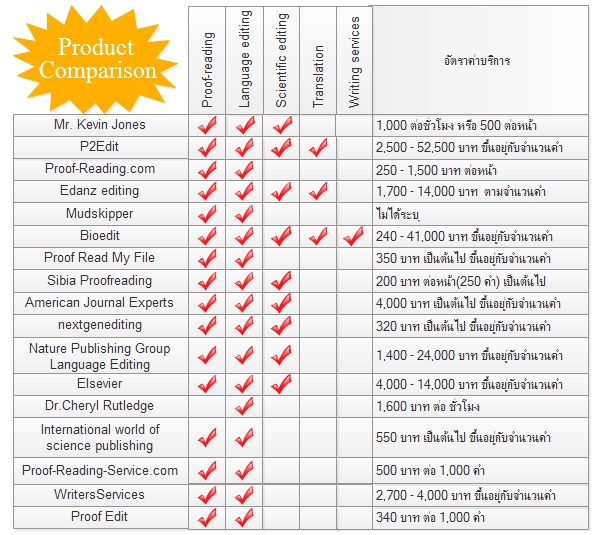
Mr.Kevin Jones for reviewing 

Please send menuscript in format .word /.jpg  to Mrs.Panida

Tel. 02-419-2680  E-Mail : Panida.rat@mahidol.ac.th


SiCRF : Siriraj Central Research Facility

Service Laboratory Equipment & Room

The Core Facilities fully equipped with advance biomedical laboratory instruments including next generation genome sequencing, microarray platforms, confocal microscopes, electron microscope, flow cytometry platforms, fast protein liquid chromatography and mass spectrometry.

– His Majesty the King’s 80th Birthday Anniversary 5th December 2007 Building, 5th Floor
– Srisawarindhira Building, 10th Floor
– Adulyadejvikrom Building, 12th Floor
The Biosafety Room – Level 3 (BSL-3)
– Department of Microbiology
– Department of Immunology
BSL-3 Isolation Room to support clinical research on emerging and recurrent infectious diseases
– Siriraj Hospital Stem Cell Laboratories
– Srisawarindhira Building, 12th Floor
– Chudadhuj Building, 9th Floor
– His Majesty the King’s 80th Birthday Anniversary 5th December 2007 Building, 5th Floor

Booking online Click here   or  More information click here


Siriraj Tissue and Biological fluid  Repositories

  1. Biological specimen repository
    Provide space for biological specimen repository to research project which has no space enough and specimen will be stored under standardization.
  2. Permission of using biological specimen for research
    Requisition of archived biological specimen for using in research.
  3. Blood processing service
    Perform blood processing to separate blood component for research project that has no research assistance or facility.
  4. Consent service
    Provide service of informed consent of specimen collection for the research project that has insufficient staff.
  5. Service of specimen collection
    Provide service for specimen collection from research project.

Mr. Sutee Udomchotphruet
Tel:  +662-419-2648
E-mail: sutee.udo@mahidol.edu

Miss Daungthip
Tel:  +662-419-2839
E-mail: Duangthip.api@mahidol.edu


Siriraj Clinical Research Center
Siriraj Clinical Research Center was established in 2003 to support and promote clinical research related activities, especially commercial research and medical therapeutics development during phase 1 and 2 clinical trials. Core services provided by the Clinical Research Center are the bioequivalence studies on generic formulation of drugs and all clinical researches from phase 1 to 4. These services are provided by staff members who have been GCP-trained and have clinical research skills and experience. More.
Clinical Registry
TCTR
Clinical Trials.gov
Training


SiRB : Siriraj Insatitution Review Board
Siriraj Institutional Review Board has a responsibility in human research project authorization and aims to preserve subject’s honor, right, safety, and well-being, according to international ethics and standards.
Click more information

IPGG : Institute of Personalized Genomics and Gene Therapy

Knowledge in molecular genetics has fundamentally advanced our understanding of human disease; yet this advancement has been underutilized in clinical services and treatments for people living in Thailand and other South East Asian (SEA) eountries. Alack of ethnic-specific genetic research and inaccessibility to related technologies underlines the problem.

The Institute of Personalized Genomics and Gene Therapy(IPGG) is being established to satisfy this domestic and regional need for specialized information, knowledge, and patient care. IPGG is focusing on 3 main arenas: conducting comprehensive and cutting-edge Thai/SEA genetic research: applying genetic information to support diagnosis treatment, and policy making; and, providing training in genetics and bioinformatics to build up a critical mass of local researchers and medical doctors for the development of the nation.

IPGG is composed of teams of medical doctors, scientists, geneticsts, bioinformaticans, statisticians, and population scientists who work in close collaboration to bring about the moveldiscoveries and advancements with both theoretical and practical implication.

Institute of Personalized Genomics and Gene Therapy (IPGG) operates on personalized genomics and gene therapy research, one-stop personalized genomics and gene therapy service, including clinical database. The institute can be applied to the national health policy which is leading the country moving towards the top of ASEAN.

More information click here

The study of stem cells has become one of the mostly widely researched areas in medical science for the repair and replacement of damaged tissue and as an alternative treatment for diseases. Increasing levels of success in advanced transplantation surgery and the use of immunosuppressive drugs to decrease the rejection of transplanted tissues has
resulted in a shortage of solid organs for  transplantation. To reduce this shortage, scientists have focused their attention on the development of artificially grown organs and ways to repair organs for replacement. The use of stem cells to correct serious diseases and sub-system failures originated at Cambridge University in 1981 with the growth of stem cells from a mouse embryo. An American scientist later advanced stem cell research by growing stem cells from human embryo in 1998.
These early discoveries and the accelerating advancement of discoveries in the field of stem cell research have resulted
in the emergence of a new science Regenerative Medicine. This new science aims to find new ways to repair organs through the transplantation of stem cells that will generate new tissue growth to repair damaged organs or tissue structures. Stem cell research has been proliferating around the world, especially basic research on cell cultures and the growt h of stem cells into specialized cells. In Thailand, however, stem cell research has been limited by a lack of researchers and scientists with an expertise in stem cells. The Faculty of Medicine Siriraj Hospital has the capability of becoming the leader in stem cell research with the support of its GMP-standard laboratory infrastructure, state-of-the-art tools and equipment, experienced and qualified scientists and researchers with an interest in stem cell therapy, and a large number of stem cell therapy candidates. One current drawback that is slowing Siriraj Hospital’s advancement in stem cell research is a notable lack of physicians, scientists, and researchers who have specialized experience in the study of stem cells. In addressing this limitation and upgrading stem cell research in Thailand to match that of international levels, the Faculty of Medicine Siriraj Hospital established the  Siriraj Center of Excellence for Stem Cell Research (SiSCR). All researchers with a specialization in stem cells were invited to join the center and work together on developing new knowledge and potential stem cell technologies for use in diagnosis, analysis, and treatment of degenerated tissues or organs. The Center of Excellence for Stem Cell Research has a vision to be the leader in stem cell research in Thailand and Southeast Asia. It aims to provide training
to develop young researchers with stem cell specialization and to be the regional research and related technologies
transfer center for cooperation in the Asia-Pacific. Educating the general public on the use and benefits of stem cell
advancements and potential is also a key mission of SiSCR. This knowledge transfer to the general public will accelerate general acceptance of this emerging and promising medical science revolution. more information….

The Division of Dengue Hemorrhagic Fever Research is a research group operated under the Medical Molecular Biology Unit (MMBU), Office for Research and Development, Faculty of Medicine, Siriraj Hospital (Mahidol University). This division was founded in 1994 to conduct research in genomics, and molecular biology in dengue hemorrhagic fever and dengue virus and other related diseases.

Over the past 20 years, the research group has published well-known studies which were accepted by the scientific community in both Thailand and internationally.  On November 1st, 2010 the Unit has been approved to be set up as the Division of Dengue Hemorrhagic Fever Research supporting the expansion of dengue virus and dengue hemorrhagic fever research in of multi-disciplinary research fields.

The Division of Dengue Hemorrhagic Fever Research has been running a collaborative research network with the Medical Biotechnology Research Unit under a Memorandum of Understanding (MOU) between the Faculty of Medicine Siriraj Hospital and the National Center for Genetic Engineering and Biotechnology (BIOTEC) since 1994. Afterwards, the research network has expanded to include a collaboration with the Department of Microbiology, Faculty of Medicine, Chiang Mai University and the supported research funds cover equipment, research budgets and staff to achieve the unit’s mission. This collaboration has led to a strong research network and high quality research along with the expansion of basic research to translational research.

More information click here.

SI Researcher Resources

Siriraj Central Research Facility

Research funds

Research Administration

Research Innovation

TATENT

Flow Process

Contact Staff