


Spinal Fracture Surgery in the Elderly: Treatment Options for Sustainable Quality of Life Recovery

By Lecturer Borriwan Santipas, M.D.
Division of Spine Surgery, Department of Orthopaedic Surgery
Introduction
Osteoporotic Vertebral Fracture (OVF) is becoming a significant health crisis in aging societies worldwide, including Thailand. Recent statistical data reveals that the global patient population has increased rapidly by 38%, rising from 6.2 million people in 1990 to over 8.6 million people in 2019. This condition typically occurs at points where bone impact resistance is compromised, resulting in severe back pain, loss of mobility, and if not appropriately treated, may lead to permanent disability.
Fracture Classification and Treatment Approaches (OF Classification)
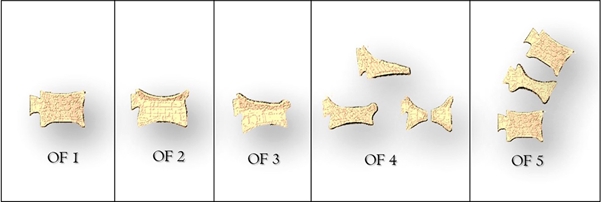
Currently, the OF Classification system (according to the German Society for Orthopaedics and Trauma Surgery – DGOU standards) is used to categorize severity levels based on spinal bone damage characteristics into 5 levels (OF 1–5).
Most commonly encountered groups:
– OF3 type (approximately 42%): significant vertebral body collapse
– OF4 type (approximately 27%): severe damage to both superior and inferior endplates
Differential treatment approaches: For non-severe fractures (such as OF1 or OF2), physicians may recommend non-surgical treatment, including back bracing combined with physiotherapy. For OF3-5 fractures with high spinal instability, physicians typically recommend surgical intervention using various appropriate methods according to fracture type, such as metallic screw fixation, cement injection, or bone structure augmentation surgery. However, treatment decisions remain at the discretion of the treating physician.
Treatment Challenges: Which Method Provides Optimal Ambulation Recovery?
Currently, there are two main standard surgical approaches for treating commonly encountered OF3-4 osteoporotic vertebral fractures:
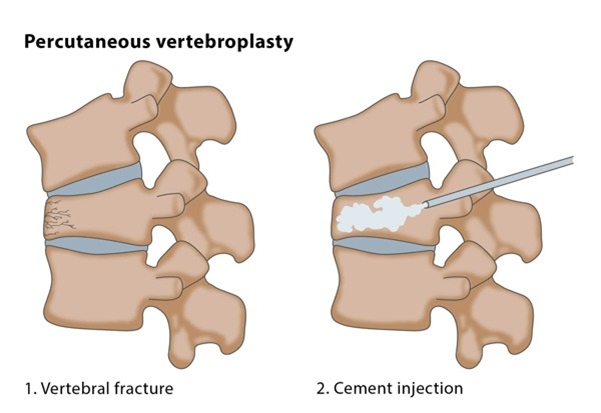
1. Vertebroplasty (VP): Focus on injecting bone cement into the fracture site to reduce pain
2. Short-segment posterior instrumentation with vertebroplasty: A more complex surgical procedure using metallic screws for structural support combined with cement augmentation
While cement injection alone is a rapid procedure, the research question that investigators sought to answer was: “Which method provides patients with better quality of life?”
Research Results
Following 1-year post-operative follow-up, significant findings include:
Quality of Life: The short-segment posterior instrumentation with vertebroplasty group demonstrated statistically significantly superior outcomes, with better Oswestry Disability Index (ODI) scores and EQ-5D quality of life scores.
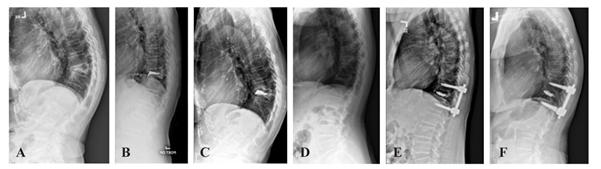
Radiographic Outcomes: Spinal alignment in the short-segment posterior instrumentation with vertebroplasty group achieved superior sagittal angle correction.
Intraoperative Data: The short-segment posterior instrumentation with vertebroplasty group had significantly longer operative time and greater blood loss compared to the VP group.
Safety Profile: No statistically significant differences were found in complication rates, kyphotic progression, adjacent-level fractures, or revision surgery rates.
Conclusion
Treatment of osteoporotic vertebral fractures with short-segment posterior instrumentation combined with vertebroplasty provides superior radiographic spinal alignment outcomes and patient quality of life compared to vertebroplasty alone at 1-year post-operatively, despite increased risks of blood loss and extended operative time. Surgeons will consider appropriate treatment methods for individual patients using comprehensive data beyond radiographic diagnosis alone.