

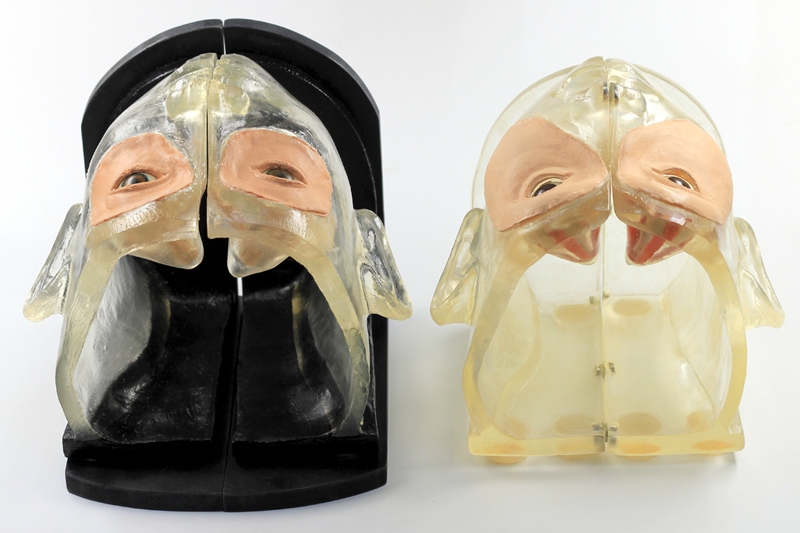
Development of a Retrobulbar Anesthesia Injection Training Simulator
Assoc.Prof.Somanus Thoongsuwan
Department of Ophthalmology
Faculty of Medicine Siriraj Hospital, Mahidol University
Background
Clinical skills training is a vital part in preparing medical professionals especially in fields such as ophthalmology where precision accuracy and patient safety are essential. During eye surgery, the eye must remain completely still and the patient must be free from pain throughout the procedure. Retrobulbar anesthesia which involves injecting a local anesthetic behind the eyeball is therefore commonly used to reduce pain and prevent eye movement.
However, the injection site is located very close to critical structures including the optic nerve and major blood vessels and the procedure is performed using a blind injection technique without direct visualization of internal anatomy. It carries significant risk of complications such as accidental perforation of the eyeball or injury to the optic nerve. As a result, practicing this technique on real patients involves serious ethical concerns and safety limitations.
To improve training effectiveness while reducing patient risk the Department of Ophthalmology together with the Medical Education Technology Center (METC), Faculty of Medicine Siriraj Hospital developed a Retrobulbar Anesthesia Injection Training Simulator. This educational innovation is intended for use in the ophthalmology residency training program and allows trainees to practice the procedure safely and confidently before performing it on real patients.
Concept and Development Process
The simulation model was developed in 2020 and later received petty patent protection in 2024. It was designed to closely reflect real human anatomy. The external structure is made from translucent material which allows trainees to observe the needle tip inside the eye socket during practice.
The eyeball and optic nerve are produced at life size using firm materials so trainees can experience realistic resistance when the needle makes contact. The upper surface is constructed from a flexible skin-like material which enables accurate palpation of the orbital bone margins. Inside the orbital cavity flexible internal components allow the needle to change direction naturally during the simulated procedure.
Educational Benefits
Residents can practice the injection repeatedly using the simulation model until they develop sufficient skill and confidence before performing the procedure on live patients. This training approach helps reduce the risk of complications that may lead to permanent vision loss and potential legal consequences.
Currently, the Department of Ophthalmology has integrated this simulator into the residency training curriculum. This allows trainees to understand the injection technique correctly, maintain safe control of needle direction and significantly enhance overall learning outcomes.
Conclusion and Recommendations
The Retrobulbar Anesthesia Injection Training Simulator is an educational innovation that supports safe effective hands-on learning. It contributes to raising the standard of ophthalmology residency training and serves as a reference model for developing medical simulation tools in other specialties. This innovation plays an important role in building a sustainable and patient-safe training system for the future.
Related Highlights